Sign up today

Sign up today
Softphone APP for Android &IOS

RG Richardson Communications News

I am a business economist with interests in international trade worldwide through politics, money, banking and VOIP Communications. The author of RG Richardson City Guides has over 300 guides, including restaurants and finance.

eComTechnology Posts

Jasmine Crockett's late Senate bid announcement roils Texas Democrats

Jasmine Crockett's late Senate bid announcement roils Texas Democrats Rep. Jasmine Crockett’s (D) last-minute decision to  enter the Tex...

‘How did we get here?’: documentary explores how Republicans changed course on the climate | Documentary films | The Guardian

‘How did we get here?’: documentary explores how Republicans changed course on the climate | Documentary films | The Guardian

‘How did we get here?’: documentary explores how Republicans changed course on the climate


In The White House Effect, now available on Netflix, archival footage is used to show how the US right moved from believing to disputing the climate crisis


Adrian HortonTue 4 Nov 2025 10.02 GMT
Share


In 1988, the United States entered into its worst drought since the Dust Bowl. Crops withered in fields nationwide, part of an estimated $60bn in damage ($160bn in 2025). Dust storms swept the midwest and northern Great Plains. Cities instituted water restrictions. That summer, unrelentingly hot temperatures killed between 5,000 and 10,000 people, and Yellowstone national park suffered the worst wildfire in its history.

‘How is this possible?’: a new film looks inside the appalling abuses of the Alabama prison system

Read more


Amid the disaster, George HW Bush, then Ronald Reagan’s vice-president, met with farmers in Michigan reeling from crop losses. Bush, the Republican candidate for president, consoled them: if elected, he would be the environmental president. He acknowledged the reality of intensifying heatwaves – the “greenhouse effect”, to use the scientific parlance of the day – with blunt clarity: the burning of fossil fuels contributed excess carbon dioxide to the atmosphere, leading to global warming. But though the scale of the problem could seem “impossible”, he assured the farmers that “those who think we’re powerless to do anything about this greenhouse effect are forgetting about the White House Effect” – the impact of sound environmental policy for the leading consumer of fossil fuels. Curbing emissions, he said, was “the common agenda of the future.”

That clip – startling to anyone even glancingly familiar with Republican orthodoxy in the years since – appears early in The White House Effect, a new all-archival documentary that examines the evolution of the climate crisis from non-partisan reality to divisive political issue. The 96-minute film, now available on Netflix, takes its name from Bush’s unfulfilled guarantee of environmental action during his four years as president, a pivotal missed opportunity – if not, as the film implicitly argues, the pivotal missed opportunity – for bipartisan US leadership on the climate crisis. “There was this moment in time when the science was widely accepted, when the public was all about tackling this,” co-director Pedro Kos told the Guardian. “It was a mom and pop issue, as American as apple pie. Flash forward to four years later, and you have a completely split electorate. How do we get there?”


The film, directed by Kos with Jon Shenk and Bonni Cohen, first rewinds the clock from Bush’s uncontroversial campaign promise back to the 1970s, when the science on the greenhouse effect became a public talking point. In news footage from the late 70s, ordinary Americans react to then President Jimmy Carter’s exhortation to face “a problem that’s unprecedented in our history” with patriotic enthusiasm; sacrifices, they confirm, may be necessary. By the early 1980s, faced with a gas shortages and hours-long lines at the pump, some of that enthusiasm had crumbled. As the Republican presidential candidate, Reagan responded to the discontent by blaming the government and calling for authority to be transferred back to the private sector (or, to use a Reagan euphemism, “experts in the field”) – setting the stage for the Republican party’s symbiotic relationship with large oil companies well aware of the impact of emissions on the climate. (To quote an internal Exxon document from 1984: “We can either adapt our civilization to a warmer planet or avoid the problem by sharply curtailing the use of fossil fuels.”)


But the film largely focuses on Bush, a blue blood east coaster who made his fortune in the Texas oilfields, and who nevertheless began his term in office in 1989 determined, at least outwardly, to break from his predecessor on the environment. Bush appointed an environmental activist, William Reilly, as head of the Environmental Protection Agency; he exhorted Congress that “the time for action is now.” The White House Effect illustrates the political forces that eroded such purpose: the corporations that, according to their own internal documents, sought to downplay and discredit scientific evidence to protect their profit; the power games by White House chief of staff John Sununu, an ally of corporate lobbyists who outmaneuvered Reilly by encouraging climate skepticism in the aftermath of disasters such as Hurricane Hugo and the devastating Exxon-Valdez oil spill.

The film works exclusively with meticulously edited archival footage – the team sorted through more than 14,000 clips from more than 100 sources, including VHS tapes stored in the New Jersey garage of a former Exxon Mobil publicist and a memo from a confidential “Global Warming Scientific ‘Skeptics’ Meeting” convened in 1991 by Sununu to empower media appearances by prominent climate contrarians. The reliance on archival was part of an effort to “immerse the public in a time when this wasn’t a political football – where we experience the politicization of the issue, rather than being told it,” said Kos. “Whenever you turn on a camera and interview someone in the present, that’s automatically going to come with the political connotations that the present brings.”
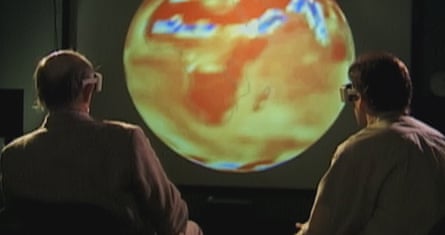
View image in fullscreenA still from The White House Effect. Photograph: Netflix


Cohen and Shenk are veterans of climate change films; the married couple directed An Inconvenient Sequel: Truth to Power, the follow-up to Al Gore’s groundbreaking documentary on looming climate catastrophe. But with The White House Effect, “we wanted to do something very different from what we’ve done in our past work and what we think of as the ‘climate change genre’ of documentaries: we wanted to just drop the truth bomb of history,” said Shenk. “We need that, right? We just need the truth.”

With archival, there’s “an opportunity to expand the conversation,” Cohen added. From man-on-the-street interviews to standard network broadcasts from the period, “hopefully you can see yourself in the film no matter who you are as an American, and feel that you’re part of the conversation, rather than some liberal film-makers preaching at you.”

The platforming of climate skeptics on mainstream media and Sununu’s counsel seemed to have an effect on Bush. By 1990, speaking at a White House conference on the climate crisis, he equivocated where he once held firm: “One scientist argued that if we keep burning fossil fuels at today’s rate, by the end of the next century, Earth could be 9F warmer than today. And the other scientist saw no evidence of rapid change,” he said. “Two scientists, two diametrically opposed points of view. Now, where does that leave us?” It left the US hamstrung by political division. Two years later, the “environmental president” reluctantly attended the 1992 Rio “Earth Summit”, a major United Nations conference to set international targets for emissions reductions, advocating against such measures in the name of economic development and stability. The move, from the world’s largest greenhouse gas emitter, angered other countries, but Bush chided the international coalition: “I don’t think leadership is going along with the mob.” The seeds for outright climate denial, and the Republican party’s unfettered and open alliance with corporate interests, had been sown.
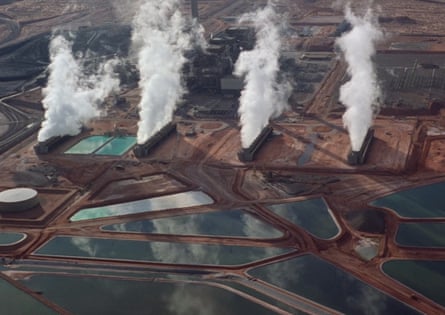
View image in fullscreenA still from The White House Effect. Photograph: Netflix


Nearly three decades later, in 2019, Reilly rued how the US missed an “incalculably important” opportunity at Rio. “The advantage we might have had if president Bush had committed to seriously undertake the reduction of greenhouse gases is that we might have removed the partisan nature of the dialogue in the United States,” he said. If that prospect, in the era of hyper-partisanship, increasingly absurd natural disasters and the Trump administration’s dismantling of environmental regulation, feels deeply infuriating – well, Cohen argued, that’s the point. “Climate change films, at least in the last 10 years, have been trying to spoon-feed the medicine of the climate crisis, and then have a ‘hope bucket’ at the end, where you can feel OK,” she said. “Our job is to create the rage. We can’t shy away from the rage. And if this film, in all of its irrefutable archival historical glory, can create that rage, then we’ve succeeded.”

The hope, she added, is that “you can feel the rage and you can feel the intolerance for the denial of truth, and that you’ll actually do something about at the ballot box. The hopelessness is when you feel like you can’t do anything. But we have a large electorate in this country – let’s get out there.”

Kos, having overseen the mass archival effort, encouraged viewers to look at “the overall arc of history” – even in the face of the Los Angeles fires, the Texas floods, the rapid and unprecedented intensification of hurricanes like the one that devastated Jamaica just last week – “what good is despair going to do?” The truth of political power, for good and for ill, is “right there in front of our eyes.”

“The choice is in our hands,” he added. “We’ve shown you a what-if moment from 1988. We’re now in another what-if moment.”

The White House Effect is now available on Netflix

Running out of pennies?


An imprint of a penny in the ground with an investigative scene set around it

Illustration: Nick Iluzada

The anti-penny crusaders have won, but at what cost? The lowly copper-plated coin is disappearing from use—and it’s causing some headaches for US businesses.

A number of merchants across the country have completely run out of pennies after the US government stopped making them earlier this year and failed to issue new guidance, the Associated Press reported:

  • Sheetz, the convenience store chain that Western Pennsylvanians swear is better than Wawa, ran a promotion offering customers a soda if they brought in 100 pennies.
  • Kwik Trip is rounding every cash transaction down to the nearest nickel, which will reportedly cost the company $3 million this year.

The Treasury Department says the US will save about $56 million by no longer minting Abe Lincoln’s face, per the AP. Businesses are generally on board with the decision but want more clarity on how to proceed. “We have been advocating abolition of the penny for 30 years,” a spokesperson for the National Association of Convenience Stores told the AP. “But this is not the way we wanted it to go.”

Donald Trump Is a Commie - by Jonathan V. Last

Donald Trump Is a Commie - by Jonathan V. Last

Donald Trump Is a Commie

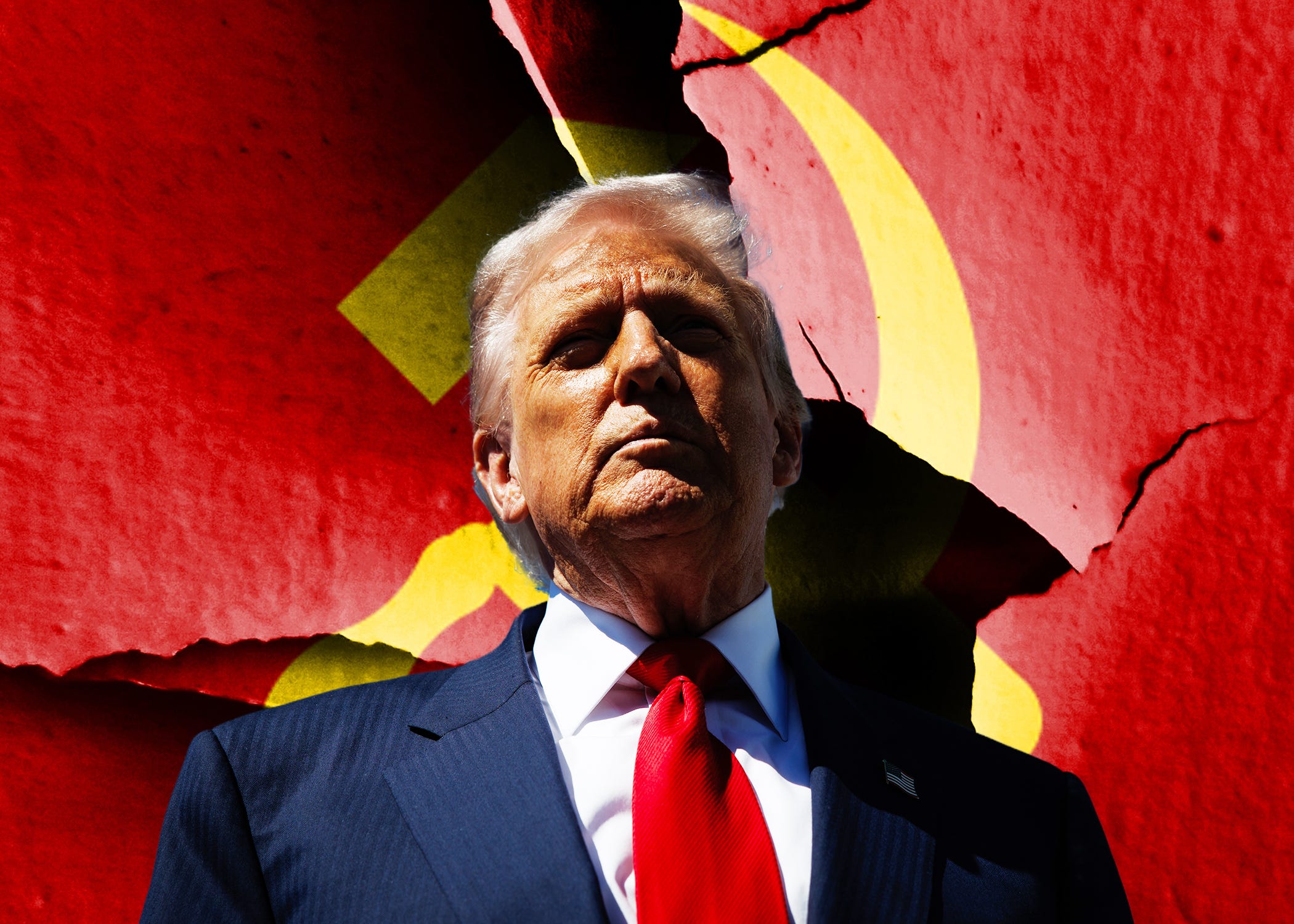
Bernie’s democratic socialism is still compatible with liberal democracy. Trump’s national socialism is not. Thank you for your attention to this matter!

(Composite / Photos: GettyImages /Shutterstock)

1. Two Paths

On Friday I wrote about the Trump administration’s latest foray into national socialism:

  • Trump wants to build nuclear power plants.

  • He has chosen Westinghouse to build them.

  • He will pay Westinghouse $80 billion for the projects.

  • In return he has compelled Westinghouse to pay him the government 20 percent of any “cash distributions.”

  • Between now and the end of January 2029, the government can compel Westinghouse to go public via an IPO, at which point the government will be awarded 20 percent ownership of the company, likely making it the single largest shareholder.

This is literally seizing the means of production. But to, you know, make America great again. Or something.

Other of Trump’s national socialist policies include:

  • Refusing to enforce the 2024 law requiring the sale of TikTok until he was able to compel that the business be sold at an extortionately discounted price to his political allies.

  • Creating a Golden Share of U.S. Steel for his government.

  • Requiring Nvidia and AMD to pay the government 15 percent of all revenues from chip sales to China.

  • Acquiring a 10 percent ownership stake in chipmaker Intel.

  • Acquiring a 15 percent stake in rare earth producers MP Materials, a 10 percent stake in Lithium Americas Corp., and a 10 percent stake in Trilogy Metals Inc.

  • Creating a “Strategic Bitcoin Reserve and Digital Asset Stockpile.”

  • Taking steps to create a sovereign wealth fund to be used as a vehicle for government investment.

  • He has demanded that Microsoft fire an executive he does not like and demanded that private law firms commit to doing pro bono work on behalf of clients he chooses for them.

This is not quite the economic regime of China or Saudi Arabia. But it’s in the same zip code. And it’s heading in their general direction and away from the regulated American free market economy as it had existed until ten months ago.

So why is it so hard for people to just say, out loud, what is obvious: Donald Trump is a socialist who is trying to make the American economy function more like Communist China?

Erebor, a new crypto-focused US bank - Peter Thiel and Palantir


Palmer Luckey gestures with his hands

Patrick T. Fallon/Getty Images

RIP Smeagol, you would’ve hated the idea of precious treasures that no one can physically grasp. And hello to Erebor, a new crypto-focused US bank that received initial federal approval this week, teeing it up to fill a financing gap left by the collapse of Silicon Valley Bank and other tech lenders in 2023.

Erebor—named after a mountain from JRR Tolkien’s universe where a dragon guarded immeasurable riches—was co-founded earlier this year by Palmer Luckey:

  • That’s the guy with a soul patch and mullet who runs the weapons manufacturer Anduril, which is also the name of Aragorn’s sword from The Lord of the Rings.
  • Erebor investors include Joe Lonsdale and Peter Thiel, co-founders of Palantir, the oft-protested software company that…also gets its name from the Tolkien franchise.

Luckey’s new venture will offer traditional and crypto-oriented banking to upstart tech companies and the ultrawealthy, according to its charter application and approval letter. It needs another stamp of approval from more federal officials before operations can commence, but road bumps are unlikely under President Trump’s crypto-friendly administration.

“Palmer’s political network will get this done,” an Erebor fundraising memo promised earlier this year. Luckey, Lonsdale, and Thiel are longtime Trump backers, and an attorney who helped them draft Erebor’s charter application is now chief counsel to the federal official who just granted the bank’s preliminary approval.

Macdonald Campus Magazine tells the story of life in wartime Canada - Julius G. Richardson

Macdonald Campus Magazine tells the story of life in wartime Canada - McGill Reporter

Macdonald Campus Magazine tells the story of life in wartime Canada
Digital archives allow readers to travel back in time more than 100 years
By Neale McDevitt
Editor, McGill Reporter
November 11, 2021

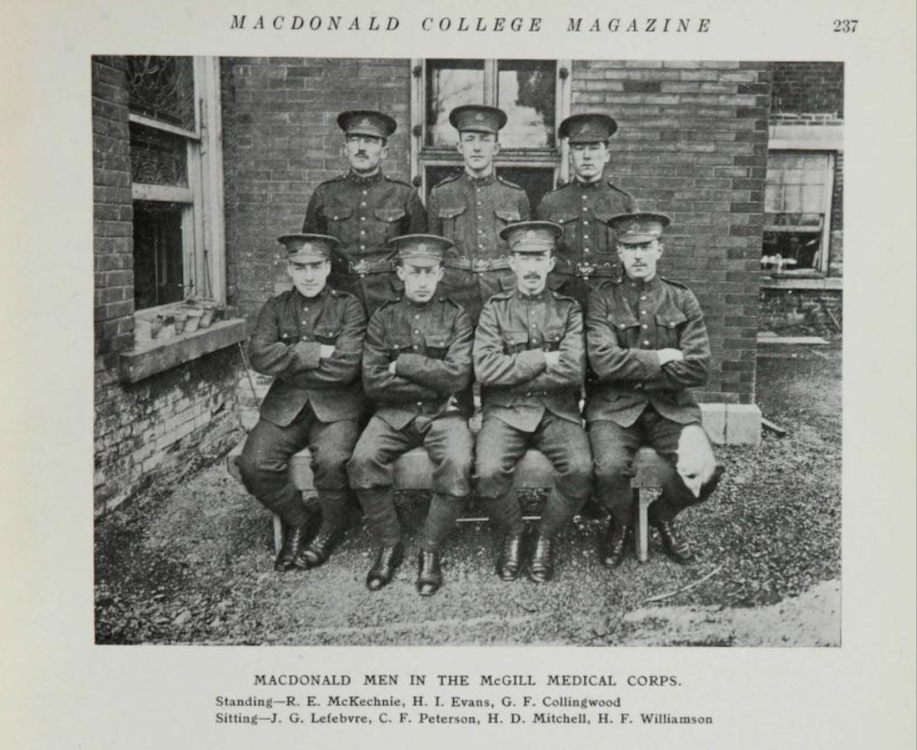
Members of Macdonald College who had enlisted in the McGill Medical Corps. From the February-March 1915 issue of Macdonald Campus Magazine
A quick scan of the table of contents of the October-November 1914 issue of the Macdonald College Magazine, reveals articles one would expect in a publication produced by an agricultural college that also trained teachers. Progressive Farming in Sherbrooke County, Preparing the Flock for Winter, and Music in the Curriculum are typical of the indexed headlines.

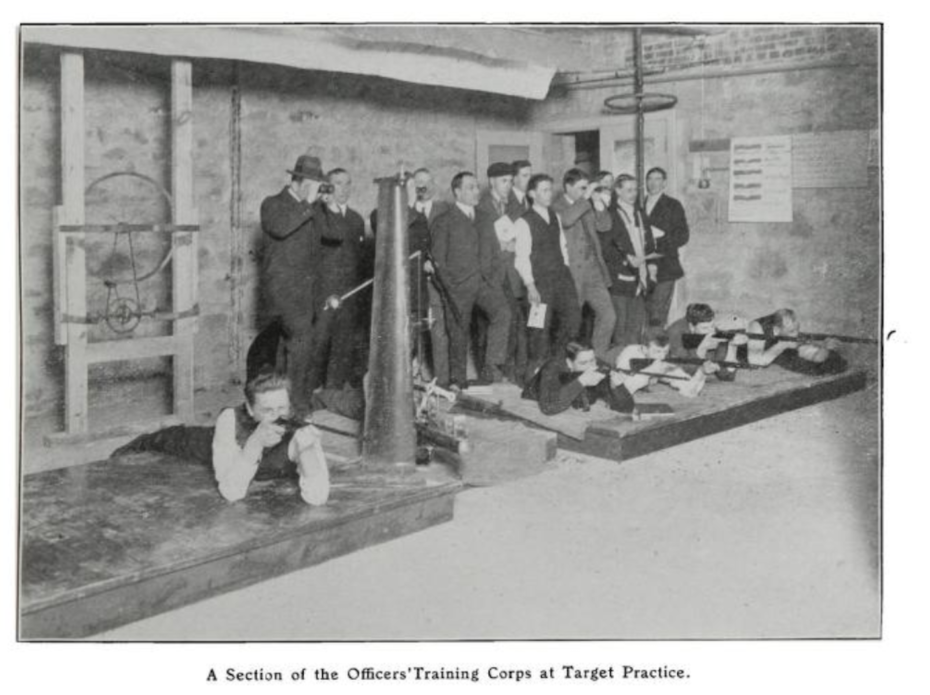
However, on Page 5, a headline unlike any other in the magazine’s (then) four-year history jumps off the page. If War Broke Out!, written by Maurice C. Signoret, asks readers to consider the outcome of a hypothetical war between France and Germany.Members of Macdonald College take target practice as part of the on-campus Officers’ Training Corps
The article ends with Signoret’s chillingly accurate prediction “What will occur in this dreadful contact, in which more than 23 millions of men will take part!” writes Signoret, an Agriculture student at the time. “What will be the hideous butchery, outrage to humanity, the horrible slaughter, to which this fantastic mixtion [sic] will give way, seconded as they will be by frightful engines of artillery, engines of ruin which will make hecatombs of corpses! A terrifying, unimaginable, and, though fatal, unavoidable war, where nations will be dashed by the shock, and in which the revolution, everywhere prepared, will sweep away emperors, kings, their servitors, and the society responsible for such catastrophes!”

Of course, the First World War started on July 28, 1914, several months before the issue was published, and much of Europe was already reeling under the impact of the conflict. However, as clarified in the Editor’s Note, the article was submitted even before war had been declared.

“This article was written last spring by Mr. Signoret for our magazine. Little did we think when he wrote it how terribly true were his words,” noted the editors. “In fact we did not publish it partly because we did not think it best to even hint at such a dire event. He is a Frenchman, and this article has been left for the most part in the original language in which he wrote it. To-day he is nobly fighting for our liberty at the front. May Heaven bring him back to us safe and sound!”

With that, the Macdonald College Magazine added a new beat to its coverage, chronicling the impact of war upon campus life and local and national agriculture, and keeping tabs on the members of its community who had signed up to serve.
Step back in time

To sift through the digital archive of those early wartime issues page by page is to take a fascinating jorney back in time.

Browsing the war year issues, readers will find classic Macdonald College Magazine fare (The Industrial Use of Potatoes) intermingled with news about the war and, in particular, the members of Macdonald College who had enlisted.

“In the fall number of the MAGAZINE we had the honour of inscribing on its pages the names of those who had volunteered for active service in the cause of the Empire. Many of those whose names were given are now doing their part, as we knew they would, in the trenches in France, or in other capacities in keeping with their training and the necessities of war… it behooves us to realize that Macdonald Campus now has representatives in the actual theatre of war,” begins an article titled Macdonald’s Roll of Honour, published in the February-March 1915 issue.

The article captures the closeness of the small Mac community and the pride the members of the College felt for their colleagues overseas. “Not long ago the Principal received a letter from Baily, in which a very vivid account of the life with the mighty army was detailed. MacClintock has also given us, in his usual racy style, an account of things in his own sphere… We honour our boys who for the time being have discarded the pen, the test-tube and the lecture-room to don the khaki of the King, and we await with confidence their return from the field of honour, and of glory. Their sacrifices have been great; great will be their reward.”
The reality of war

Of course, the sacrifices were great.

In all, 357 members of Macdonald College served in the First World War. Thirty-four did not come home.

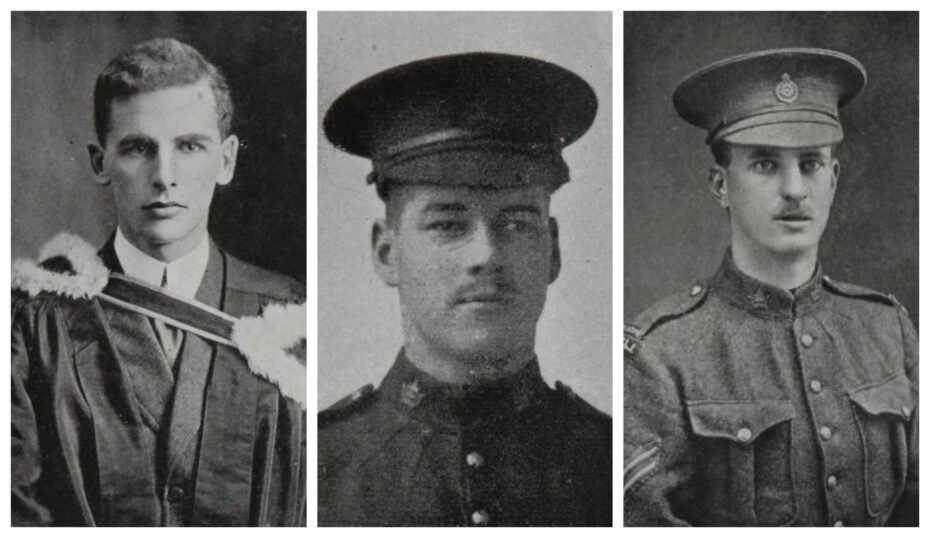
The October-November 1916 issue of the Magazine News carried tragic news. Three members of the Mac community had been killed in Europe – the first such losses for the College.From left to right: W.D. Ford, Julius G. Richardson and James H. McCormick were the first three members of Macdonald College to be killed in action during the First World War

W.D. Ford (BSA’13), was described as “one of the most promising men in his class,” in the Magazine’s obituary, and “one of those rare beings whose keen eyes found no difficulty in descrying the path of duty, whose inherent honesty and nobleness of character permitted him to deviate no hair’s breadth from this path.” A lance corporal in the Canadian Infantry (Eastern Ontario Regiment), Ford, was killed in action at Sanctuary Wood in Ypres on June 2, 1916.

Julius G. Richardson was also killed in Ypres, but on June 7, 1916. Richardson had put his Agriculture degree on hold to enlist, serving as private with the 24th Battalion, Canadian Infantry (Quebec Regiment). “It is difficult for us to realize that our College chum and true friend to all who knew him, will never return,” reads the obituary. “We all looked forward to his coming back to complete his course at Macdonald with us.”

A sergeant in the Princess Patricia’s Canadian Light Infantry (Eastern Ontario Regt.), James H. McCormick, was killed during the Battle of the Somme on September 15, 1916. “Probably no student who has attended this institution had any quicker insight into the intricacies of a subject than he,” says the Magazine’s obituary. “His ability to tell a good story, his jolly laugh, his willingness at all times to help a fellow student through some difficult phase of physics or chemistry, helped him win a multitude of friends, and many a happy hour was spent in his company.”

Read the Macdonald College Magazine / Journal digital archives online, including the issues spanning World War II.