Sign up today

Sign up today
Softphone APP for Android &IOS

RG Richardson Communications News

I am a business economist with interests in international trade worldwide through politics, money, banking and VOIP Communications. The author of RG Richardson City Guides has over 300 guides, including restaurants and finance.

Trump administration eyes expanding travel ban to 30+ nations

Trump administration eyes expanding travel ban to 30+ nations
by Rebecca Beitsch · Administration
Homeland Security Secretary Kristi Noem said the Trump administration is planning to expand its travel ban to more than 30 countries in the wake of a deadly shooting against National Guardsmen. “I won’t be specific on the number, but it’s over 30, and the President is continuing to evaluate countries,” Noem said Thursday evening in…


Fewer international students are enrolling at U.S. colleges


Personal Finance

Fewer international students are enrolling at U.S. colleges, which could cost the country $1 billion, reports find
Published Sun, Nov 30 20257:35 AM EST

Jessica Dickler@jdickler
ShareShare Article via FacebookShare Article via TwitterShare Article via LinkedInShare Article via Email
Key Points
In the fall 2025 semester, new international student enrollment at U.S. institutions fell 17%, largely due to visa restrictions and government policies, according to a recent report.
There are steep economic consequences to having fewer students from abroad, other reports also show.


watch now
VIDEO09:38
Rep. Khanna on foreign student ban: International students contribute $44B to the American economy


After a battle over immigration policies and international student visas, fewer new international students chose to study on U.S. college campuses this fall, which comes at a significant economic cost.

In the fall 2025 semester, the tally of new international students studying in the U.S. sank 17%, according to a fall snapshot from the U.S. Department of State and the Institute of International Education released earlier this month.


Altogether, international students at U.S. colleges and universities contributed nearly $55 billion to the U.S. economy over the 2024-25 academic year, including tuition revenue as well as student spending, according to the IIE’s Open Doors report.

This year’s sharp enrollment decline — largely due to the Trump administration’s changes to the student visa policy — is projected to cost the economy $1.1 billion, according to a separate analysis from NAFSA: Association of International Educators.

Read more CNBC personal finance coverage
Student loan borrowers, including higher earners, may soon qualify for lower bills
International student enrollment declines, which could cost U.S. $1 billion: Reports
How Trump’s ‘big beautiful bill’ could affect your Giving Tuesday tax break
That ‘free’ money in your 401(k) may not belong to you just yet
AI data center ‘frenzy’ is pushing up your electric bill — here’s why
‘Buyers may be a little disappointed’ by Black Friday car deals: analyst
IRS releases guidance for Trump’s tips, overtime deductions. What workers need to know
Why ACA subsidy cliff may discourage people from working
Most retirees don’t tell adult children about their inheritance. What to know
Shoppers curtail Black Friday plans to stretch their budgets, limit debt
Cash can feel safe, ‘but it doesn’t grow your wealth,’ portfolio strategist says
Many retirees soon must take year-end required withdrawals — and mistakes can be costly
Recent college grads face one of the toughest job markets in a decade
56-year-old man just got over $170,000 in student loan forgiveness under Trump
Social Security 2026 benefit notices: Here are the changes to monitor
Roth conversions could trigger a ‘tax torpedo’ under Trump’s ‘big beautiful bill’
Why AI may kill career advancement for many young workers
Concerns mount for student loan borrowers amid Education Department restructuring
CNBC’s Financial Advisor 100: Best financial advisors, top firms for 2025 ranked

View More


A separate analysis by Implan, an economic software and analysis company, found that when accounting for the direct loss of student spending as well as the ripple effects across the economy, the drop in enrollment amounts to a nearly $1 billion loss to gross domestic product.

“International students do far more than attend classes — they sustain local economies,” said Bjorn Markeson, an economist at Implan. “Their spending supports thousands of jobs, stimulates local businesses, and generates tax revenue that underpins community services.”

Before the Trump administration put a temporary pause on new visa applications in the spring, there were nearly 1.2 million international undergraduate and graduate students in the U.S., mostly from India and China, making up about 6% of the total U.S. higher education population, according to the Open Doors report.

A declining pipeline


The U.S. has been the top host of international students, but the enrollment pipeline was already under pressure. Fewer new students from abroad also enrolled for the fall 2024 semester, notching the first decline since 2020-2021, during the Covid pandemic, according to the Open Doors data.

More restrictive student visa policies in the U.S. and changing attitudes abroad about studying here were factors contributing to that decline, other research shows.

“A close read of enrollment figures from last year and this fall shows that the pipeline of global talent in the United States is in a precarious position,” Fanta Aw, NAFSA’s executive director and CEO, said in a statement.


“The ripple effects of these policy changes are being felt across campuses and communities around the world,” Aw said.
The impact on U.S. colleges


While the decline in international enrollment has broader economic effects, colleges and universities and the students they serve are the hardest hit.

In addition to the value of international student perspectives, foreign students typically pay full tuition, which makes international enrollment an important source of revenue for colleges and universities, according to Open Doors’ survey of more than 825 institutions.


With fewer new students and tuition dollars coming in, there are fewer resources for faculty, programs, and financial aid for U.S. students.

Those funds support colleges’ ability to provide financial assistance, Ted Mitchell, president of the American Council on Education, previously told CNBC.

“Full-paying international students pay scholarships for domestic students — it’s a 1-to-1 relationship,” Mitchell said.

Cloudflare outage hits major web services including X, LinkedIn and Zoom – business live

Cloudflare outage hits major web services including X, LinkedIn and Zoom – business live
by Graeme Wearden · Business


Cloudflare reports it is investigating issues with Cloudflare Dashboard and related APIs

Technical problems at internet infrastructure provider Cloudflare today have taken a host of websites offline this morning.

Cloudflare said shortly after 9am UK time that it “is investigating issues with Cloudflare Dashboard and related APIs [application programming interfaces – used when apps exchange data with each other].


The UCP Separatist Wing Takes Aim at Danielle Smith | The Tyee

The UCP Separatist Wing Takes Aim at Danielle Smith | The Tyee

The UCP Separatist Wing Takes Aim at Danielle Smith
The premier’s pipeline deal with Carney draws boos at the party’s AGM.

David Climenhaga TodayAlberta Politics

David J. Climenhaga is an award-winning journalist, author, post-secondary teacher, poet and trade union communicator. He blogs at AlbertaPolitics.ca. Follow him on X @djclimenhaga.Our journalism is supported by readers like you. Click here to support The Tyee.
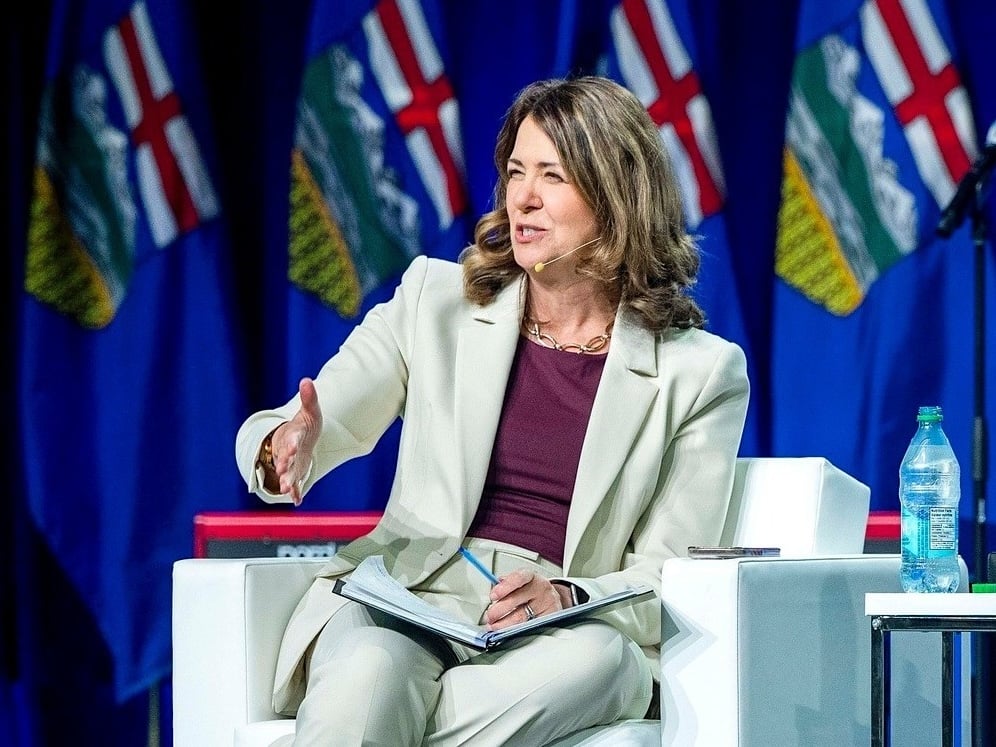


Alberta Premier Danielle Smith urged AGM delegates not to ‘give up on our country just as the battle has turned in our favour and victory is in sight!’ Photo via Facebook.


The Frankenparty stitched together in 2017 by Jason Kenney from the Wildrose Party and the Progressive Conservatives has spawned a monster.

Announcements, Events & more from Tyee and select partners
CONTEST: Win a Limited Edition Book Box from Read Local BC

Three lucky Tyee readers will receive a curated holiday literary treat of their choice.

Hardline Alberta separatists who were tolerated by Kenney and have for months been coddled by Premier Danielle Smith as a weapon against Justin Trudeau as of Saturday night control half, or nearly half, the United Conservative Party’s governing board. One vote was too close to call and was being recounted.

It’s been pretty clear to anyone paying attention that separatist trouble has been brewing in the UCP for a long time. But since the start of the party’s annual general meeting in Edmonton Friday night, it’s been obvious to almost everybody — despite the premier’s effort to keep the topic off the agenda.

That was when AGM delegates booed Danielle Smith, for heaven’s sake, for cutting a pipeline deal with Liberal Prime Minister Mark Carney. And it was not just a few grumbles from the crowd, if you go by the clip that’s been circulating on social media, but sustained, prolonged and loud jeering. Smith’s weird nervous laughter when the boos finally subsided was cringeworthy.


On Saturday, during her speech to the AGM, Smith got both catcalls and standing ovations, but about the best that can mean from the party’s perspective is that its activists are roughly divided between committed hard-core separatists and other varieties of conservatives that may include covert separatists, the separation curious, vaccine conspiracy theorists, cryptocurrency bugs and full-MAGA Trumpophiles who would still like to hang on to a Canadian passport just in case.

At one point in the speech, Smith said: “My friends, let’s not throw in the towel and give up on our country just as the battle has turned in our favour and victory is in sight!” Loud boos immediately erupted. She exclaimed: “It is!” Mixed cheers and boos followed half-heartedly.

So while they may love the “grand bargain” struck by Smith and Carney at the Calgary Chamber of Commerce, that doesn’t mean they’re gonna love it at the Free Alberta Clubhouse in Gopher Butte.

And as the official favourite book of the UCP unequivocally states, “if a house be divided against itself, that house cannot stand.”

Or, to put that another way: Something’s gotta give.


Billionaires Don’t Control Us


Get The Tyee’s free daily newsletter in your inbox.

Journalism for readers, not profits.

EmailSubscribe

Kenney built the alliance with those people to engineer his double reverse hostile takeover of the Wildrose and Progressive Conservative parties, purging “Red Tories” as a first order of business. Smith has nurtured it ever since she took over as leader.

You’ve read about Take Back Alberta, the UCP faction that pushed out Kenney in May 2022 when he proved not to be extreme enough for their taste and replaced him with Smith. Well, the Alberta Prosperity Project crowd that wants a Petrorepublic of Alberta are essentially the same MAGA cadres, except the APP’s Jeffrey Rath is the new David Parker.



Has Separatism Gone Mainstream in Alberta?read more

But now that Smith has reached an entente cordiale with the federal Liberals to do what the oil industry wants — which, her COVID-skeptical views notwithstanding, has been her primary objective since her days as Wildrose leader — the monster she and Kenney created has become dangerous to her, just as it was to him.

And right when she’d hit upon a formula that just might work to overcome the popular anger that is bedevilling the UCP for corruption scandals, attempted pension hijacking, galloping health-care privatization, vaccine rationing and contempt for human rights with the use of the notwithstanding clause to prove it, the separatists have reared their heads again.

Well, you know what they say. “If you’re gonna lie down with dogs, you’re gonna get up with fleas.”

“That activist base is well organized and unafraid of toppling a party leader, as former premier Jason Kenney discovered in 2022,” observed political commentator Dave Cournoyer on his Substack Friday. “That is the big reason why they get more attention paid to them by Premier Danielle Smith than any other premier has paid to a party’s membership in recent memory.”

“The UCP governs with its enthusiastic activist base of supporters in mind and it has been clearly reflected in recent government policies restricting access to vaccinations, banning electronic voting tabulators, banning books in school libraries, banning transgender health services and blocking transgender athletes from competing in sports,” he explained.



The Ugly Underside of Alberta Separatismread more

Postmedia political columnist Don Braid appeared to be almost beside himself last night over where this was all going to end up. “Smith put her heart and possibly her future into the pro-Canada plan,” he fretted. “If it fails, God only knows what happens next in Alberta.”

Possibly the destruction of the country, one imagines he is thinking, or, even worse, the election of the NDP!

Braid called the premier’s unwillingness to confront the party’s separatists in her AGM speech wise. Well, that’s one interpretation.

It means the UCP will continue to flirt with separatism, and separatists, who have already proved they can remove the leader whenever they wish, will continue to use the UCP to achieve their goal.

If Smith won’t purge them, voters are going to have to — probably in the face of the most aggressive foreign interference in a democratic vote since the Brexit referendum on June 23, 2016.

U.S. moves to tame the skies as disruptive passenger incidents reach new highs

U.S. moves to tame the skies as disruptive passenger incidents reach new highs


U.S. moves to tame the skies as disruptive passenger incidents reach new highs
Published Sat, Nov 22 20252:12 AM EST
Kaela Ling@/in/jamiekaela-ling
ShareShare Article via FacebookShare Article via TwitterShare Article via LinkedInShare Article via Email

The U.S. Department of Transportation on Wednesday launched a nationwide campaign urging travelers to improve their behavior at airports and on flights, as disruptive incidents remain far above pre-pandemic levels.

The effort, called ”The Golden Age of Travel Starts with You,” aims to restore civility in the skies and address a surge in disruptive behavior. The department said the initiative is meant to “jumpstart a nationwide conversation around how we can all restore courtesy and class to air travel.”


Disruptive passenger incidents doubled in 2024 compared with 2019, while in-flight outbursts — ranging from inappropriate behavior to physical attacks — surged 400% by 2025.

The Department of Transportation said the campaign aimed to improve the travel experience while ensuring the safety of passengers, flight crew and airport staff.

In a video promoting the campaign, Transportation Secretary Sean Duffy urged travelers to consider their conduct, asking whether they help pregnant passengers or older adults with overhead luggage, or simply say “please” and “thank you.”

He also asked passengers to “dress with respect” ahead of the holiday travel season.


Of the 82 million Americans expected to travel over the Thanksgiving holiday, about 6 million are expected to commute by plane this year, or a 2% increase from 2024, according to a forecast by the American Automobile Association.


International tourism grew 5% in the first half of 2025 from a year ago, reaching almost 690 million passengers, the United Nations World Tourism Organization said. That figure is 4% above the comparable period in 2019.

The U.S. isn’t alone in pushing for better passenger behavior. The United Kingdom′s aviation industry introduced the “One Too Many” campaign in 2018 to curb alcohol-related incidents.

The European Union Aviation Safety Agency also launched an initiative in 2019 to raise awareness of unruly behavior, noting then that unruly passengers threaten flight safety every 3 hours, with 70% of incidents involving some form of aggression.

In 2015, China also began a blacklist of passengers who are disruptive on flights after a series of high-profile incidents.

Despite these measures, reports of unruly passenger incidents continue to climb. More than 53,000 incident reports were filed by over 60 operators worldwide, or one incident for every 395 flights in 2024, the International Air Transport Association said in June. That compares with one incident for every 405 flights a year earlier.

Quebec triples proof of funds requirement for study permits in 2026 | CIC News

Quebec triples proof of funds requirement for study permits in 2026 | CIC News

Quebec triples proof of funds requirement for study permits in 2026

author avatar
Asheesh Moosapeta

Quebec’s proof of funds requirements for study permit applications are set to more than triple for some students starting January 1, 2026.

These increases apply to both new international students applying for their first study permit and current international students who need to extend their study permit validity.

Single international students under the age of 18 hoping to study in the province will see the fund requirements for their basic needs increase to more than triple the current required amount.

Single international students above the age of 18 will see the fund requirements for their basic needs increase by more than $9,000.

Discover your options to study in Canada

All dollar amounts discussed in this article are in Canadian dollars (CAD).

Fund requirements increase based on the number of family members added to a study permit application (spouse, dependents, etc.).

The table below shows the current funds you are currently expected to have versus how much you will be required to have as of January 1, based on family size.

Number of people included in the application (including principal applicant) Until December 31, 2025 As of January 1, 2026 
One person under the age of 18 $7,756 $24,617 
One person aged 18 or over $15,508 $24,617 
Two people aged 18 or over $22,745 $34,814 
Two people aged 18 or over and one person under the age of 18 $25,479 $42,638 
Two people aged 18 or over and two people under the age of 18 $27,499 $49,234 

Of note is that the above funds are separate from tuition costs and transportation fees. An applicant must demonstrate their financial capacity to cover all of these expenses to be eligible for a study permit.

Due to Quebec’s special immigration agreement with Canada's federal government, the province can dictate its own financial requirements for temporary residents (workers and students) looking to move there.

With this impending increase, Quebec’s proof of fund requirement will exceed fund requirements for the rest of Canada, which are determined by Immigration, Refugees and Citizenship Canada (IRCC).

When do I need to show proof of funds?

International students who plan to study in Quebec must show proof of funds at both the provincial and federal stages of their study permit application (and again when renewing their study permit, if needed).

Students planning to study in Quebec must first apply to the province for a Quebec Acceptance Certificate (CAQ) before they apply for a study permit from the federal government. This process is repeated if a study permit holder needs to extend their permit.

When you apply for your CAQ, Quebec’s immigration ministry will require proof that you can pay your tuition fees and travel costs, plus a minimum amount for living expenses for yourself and any accompanying family members—before issuing a CAQ. This financial capacity requirement applies both for your first CAQ and when you renew your authorization to study in Quebec.

After receiving your CAQ, you apply to IRCC for a study permit. At that stage, IRCC also reviews your proof of financial support—both for first-time applications and study-permit extensions—where officers check that you still have enough money to support yourself while you study in Quebec.

Note that the same funds are assessed by both Quebec and IRCC. Applicants do not need to provide additional funds for IRCC assessment.

In practice, this means that a student that will attend a Quebec institution will normally need to demonstrate proof of funds:

  1. When applying for their first CAQ;
  2. When applying for their first study permit;
  3. When renewing their CAQ (if applicable); and
  4. When extending their federal study permit (if applicable).

How can I show proof of funds for my study permit application?

The Quebec government has outlined the documents that it will accept in support of a student’s financial capacity to meet the proof of funds requirement for a study permit.

Examples of acceptable proof of funds documents include:

  • Evidence that money has recently been transferred;
    • For instance, from abroad to a Quebec bank account, or documents showing other assets and sources of income.
  • A recent authorization to transfer funds;
    • Issued by the currency exchange control authority in their country of origin or residence.
    • Only accepted as proof by Quebec's immigration ministry if the country limits outflow of funds.
  • A recent official scholarship or bursary confirmation
    • Must clearly state how much money will be received each month and each year.
  • Recent pay slips showing current employment income;
  • A bank letter;
  • The most recent income tax notice of assessment, indicating annual income;
  • Bank statements for the last three months; and/or
    • Must show the name of the account holder and the current account balance.
  • An updated bank book.
    • With this should be included proof that the applicant is the owner of that bank book.

Losing interest in America’s Cup


Scuttlebutt Sailing Club, the official club of Scuttlebutt Sailing News, officially sanctioned by US Sailing since 2001, and officially available to all Scuttlebutt readers. SSC fulfills the racing rule which requires club membership. For details, click here.

Losing interest in America’s Cup

by Roger Marshall
Interesting story on the America’s Cup, but I wonder who is deluding who (whom?). To quote, “it’s the last great sporting event that hasn’t been commercialized.” The America’s Cup was commercialized in the 1930’s when Sir Thomas Lipton (he of Lipton Tea), entered the fray.

The America’s Cup used to be interesting in that hull shapes somewhat resembled the boats that everyday sailors sailed. Gear such as winch design, headstay foils, sail development directly trickled down to the guy who goes out for an afternoon sail. The America’s Cup was the World Series of day sailing. The Admiral’s Cup was the Superbowl of offshore sailing. The boats of the time were similar to boats the average sailor owned and could easily relate to.

In those days, there were challenger trials and defender trials, all with a path to the finals. The buildup may have been slow, out of sight of most spectators, but it lasted all summer and crested in September. It was closely followed by sailors all over the world. I remember being called by a friend from Sweden during the Australia-Freedom series. He was in a restaurant and put me on speaker for all to hear. I heard the roar when I told him Australia was ahead. None of that would happen today.

Today the America’s Cup caters to spectators by going around a short course that is, frankly, boring as all hell. As soon as one boat gets in front, it’s over. The boats have little trickle down for the average guy except for, maybe electronics. The America’s Cup sailors wear helmets, talk on radios, cycle or wind handlebars to charge the batteries. Where does that relate to today’s sailor? Do you put grandma on a bicycle to fuel your Sunday afternoon cruise? Do you ask your wife and kids to wear helmets and talk into microphones while eating Oreos?

I can see the need for speed, after all, every America’s Cup sailor tries to make the boat go faster, be it a J Class, a 12-meter or any of the other AC boats, but frankly the spectacle has become very narrow and very boring with absolutely no buildup. Even SailGP does better, in that it has a series, a gradual build up, and a final event. But even that has become a highly specialized, made-for-TV event.

That is why the America’s Cup is dying.

Trump dismantle Education Department

Trump dismantle Education Department


Trump administration takes further steps to dismantle Department of Education
Published Tue, Nov 18 20252:12 PM EST

Annie Nova
ShareShare Article via FacebookShare Article via TwitterShare Article via LinkedInShare Article via Email
Key Points
The Trump administration announced said on Tuesday that it will transfer much of the U.S. Department of Education’s tasks to other agencies.
Currently, the agency oversees the country’s $1.6 trillion federal student loan portfolio, provides funding to low-income students and enforces civil rights in classrooms across the country.


U.S. Secretary of Education Linda McMahon smiles during the signing event for an executive order to shut down the Department of Education next to U.S. President Donald Trump, in the East Room at the White House in Washington, D.C., U.S., March 20, 2025.
Carlos Barria | Reuters


The Trump administration says it will transfer much of the U.S. Department of Education’s programs to other agencies, a move experts say is part of President Donald Trump’s directive to dismantle the agency.

During a press call with reporters on Tuesday, a senior administration official said the administration had signed agreements with four other federal agencies, including the U.S. Department of Labor and the U.S. Department of Health and Human Services, to begin managing programs currently under the Education Department.


Trump signed an executive order in March aimed at closing the Education Department, which oversees the country’s $1.6 trillion federal student loan portfolio, provides funding to low-income students and enforces civil rights in classrooms across the country.

Only Congress can unilaterally eliminate the Education Department. But the Trump administration may be trying to use a workaround by contracting with other agencies to perform the department’s tasks.

“They are attempting to hollow out the U.S. Department of Education, leaving behind a shell of the original organization,” said higher education expert Mark Kantrowitz.

Earlier this year, the Trump administration laid off nearly half of the Education Department’s staffers.

“We’ll peel back the layers of federal bureaucracy by partnering with agencies that are better suited to manage programs,” Education Department Secretary Linda McMahon wrote in a recent op-ed in USA Today.


The government shutdown, McMahon said, “underlined just how little the Department of Education will be missed.”

Former President Jimmy Carter established the current-day Education Department in 1979. Since then, the department has faced other existential threats, with former President Ronald Reagan calling for its end and Trump, during his first term, attempting to merge it with the Labor Department.

They Updated Grok. It's Very Eager to Please

They Updated Grok. It's Very Eager to Please

The folks at Elon Musk’s AI company, xAI, are “excited” to introduce a new version of their flagship model. Grok 4.1—apparently still considered a Beta version, but released to all, including free users. 

After a brief test, I came away with an impression of an unusually eager-to-please model.

Trump White House ballroom demolition work sparks anger

Trump White House ballroom demolition work sparks anger


White House calls Trump ballroom demolition work furor ‘manufactured outrage’
Published Tue, Oct 21 202510:39 AM EDTUpdated Tue, Oct 21 20254:57 PM EDT

Spencer Kimball@spencekimball
ShareShare Article via FacebookShare Article via TwitterShare Article via LinkedInShare Article via Email
Key Points
Workers began demolishing parts of the White House’s East Wing to prepare for the construction of a ballroom.
The Treasury Department warned employees not to share photos of the East Wing as excavators tear down parts of the building.
President Donald Trump has said he and private donors will finance the cost of the 90,000-square-foot, $250 million ballroom.


Workers demolish the facade of the East Wing of the White House on Oct. 20, 2025 in Washington, DC.
Kevin Dietsch | Getty Images


The White House on Tuesday dismissed anger over the demolition of parts of the building’s East Wing to build a new ballroom at the behest of President Donald Trump.

“In the latest instance of manufactured outrage, unhinged leftists and their Fake News allies are clutching their pearls over President Donald J. Trump’s visionary addition of a grand, privately funded ballroom to the White House,” the White House said in a statement.


The White House called the ballroom “a bold, necessary addition that echoes the storied history of improvements and additions” by prior presidents.

Photos of construction workers tearing down parts of the building went viral online Monday, triggering public anger over the planned 90,000-square-foot, $250 million ballroom.

“You probably hear the beautiful sound of construction to the back,” Trump said during a Rose Garden event Tuesday. “That’s music to my ears. I love that sound. Other people don’t like it. I love it.”

In July, Trump said that construction of the ballroom “won’t interfere with the current building.”

“It’ll be near it but not touching it, and pays total respect to the existing building, which I’m the biggest fan of,” Trump said of the White House at the time.


The Treasury Department has told staff not to share photos of the East Wing, a spokesperson confirmed to CNBC on Tuesday. The department is located next to the White House, and has a clear view of the demolition work.

“Carelessly shared photographs of the White House complex during this process could potentially reveal sensitive items, including security features or confidential structural details,” the Treasury spokesperson told CNBC.

“Out of an abundance of caution, we have urged our employees to avoid sharing these images.”

The Wall Street Journal first reported Treasury’s message to employees.

“Trump’s billionaire ballroom. This is a disgrace. Welcome to the Second Gilded Age,” Rep. Darren Soto, D-Fla., tweeted Monday, above a photo from The Washington Post showing the demolition work.

Trump has said that he and private donors will finance the construction of the ballroom.

Comcast, the current parent company of CNBC, was on a list of top donors to the ballroom’s construction. It is unclear how much Comcast and other donors contributed. CNBC will spin off from Comcast before the end of this year under a new parent company Versant.