RG Richardson Business & Economics

RG Richardson Business & Economics
Interactive financial ebooks

Kindle users get crafty as old models stop working

  Kindle users get crafty as old models stop working

Jailbreaking kindle

Niv Bavarsky

Paperback diehards who claim to love lugging around Ron Chernow doorstoppers are getting vindicated. Today, Amazon is ending support for Kindle e-readers released before 2013—which prompted some users to load up on books or alter their devices.

While the titles already loaded on the gadget your parents gifted you in 2010 aren’t going anywhere, the owners of the ~2 million older Kindles still in use won’t be able to acquire new books from the Kindle Store.

  • The change affects more than a dozen models, including some Kindle Fire tablets, the Kindle Paperwhite 1st Generation, and the Kindle Touch.
  • Amazon is offering a 20% discount on new Kindles and a $20 credit for e-book purchases to those trading in qualifying older models.

But some aren’t rushing to Amazon.com

Many scrappy bookworms are now sidestepping the Amazon ecosystem by sideloading titles onto their vintage Kindles from designated apps on their computer.

Others are altering their Kindle’s software—a more technically involved process known as jailbreaking that may violate Amazon’s terms of service (though not always the law). This allows them to install alternative reading apps with more features and download books in formats that aren’t compatible with ordinary Kindles. You can see how people are doing it here.

Many users are angry…accusing Amazon of practicing planned obsolescence and exacerbating the issue of e-waste, with some saying they’ll switch to competing e-readers. Amazon currently controls 72% of the e-reader market.

Investors are pulling away from AI on a global scale

 Investors are pulling away from AI on a global scale

Investors wary from Iran war

Spencer Platt/Getty Images

Investors around the world are dumping tech stocks like they’re toxic cast members on Love Island. Tuesday continued a global sell-off in tech that may be a sign that traders have become skittish about the long-term profitability of AI and chipmakers.

The abandoning of the AI ship began in the US on Monday before spreading to Asia yesterday and resuming in the States after the other side of the world went to sleep:

  • South Korea-based chipmakers SK Hynix and Samsung fell more than 12% yesterday, resulting in a 10% decline in the Korean Composite Stock Price Index.
  • Magnificent Seven stocks finished down 1.5% as a group yesterday, with only Microsoft and Amazon showing a gain.
  • Other US-based AI companies to take a hit included Broadcom (-3%), Micron (-13.2%), AMD (-5.8%), Intel (-6.1%), and Marvell (-9.4%).

What’s causing the sudden loss of confidence?

Much like a couple trying to decide what to have for dinner, no one has a definitive answer—but there are several plausible options.

Google/SpaceX dips: On Monday, both companies took big losses—Google dropped 5%, while SpaceX fell 16%. Some analysts believe that was enough to trigger the sector-wide selloff.

Interest rates: Most forecasters believe that the Fed will raise rates by at least a quarter-point this year. Bank of America predicted on Monday that there will be three hikes, totaling three-quarters of a point, in 2026. Higher rates could result in a deceleration of the heavy investing in AI technology that tech companies have planned in the coming years.

Spending. Investors periodically remember that they’re worried about the hundreds of billions of dollars that tech giants are investing in AI.

What’s next: JPMorgan analysts suggested that the anxiety could be related to Micron dropping its earnings report this afternoon. The chipmaker is expected to provide insight into whether the demand for AI infrastructure will remain high...or if the panic will continue.

How does the Fed work


So how does the Fed work? Glad you asked! USAFacts Founder Steve Ballmer just dropped this new video on the Fed and we couldn’t wait to share it with you. 
Join Steve as he breaks down the Federal Reserve's complex role in the American economy. He'll break down complicated concepts, provide visuals to shed light on the institution, and even make a few costume changes. 
 
This is the first Spotlight edition of the USAFacts newsletter, which we’ll send when we have a cool new way to explore data with you. You can expect to get them about once a month. 
 
Here's a preview of what you'll find in the video, plus data to understand the Fed's role in your economic well-being:  
The Federal Reserve is the most important bank you’ll never use.
  • It’s a bank for banks. It holds cash reserves, moves money between banks, and can lend to them whenever needed.

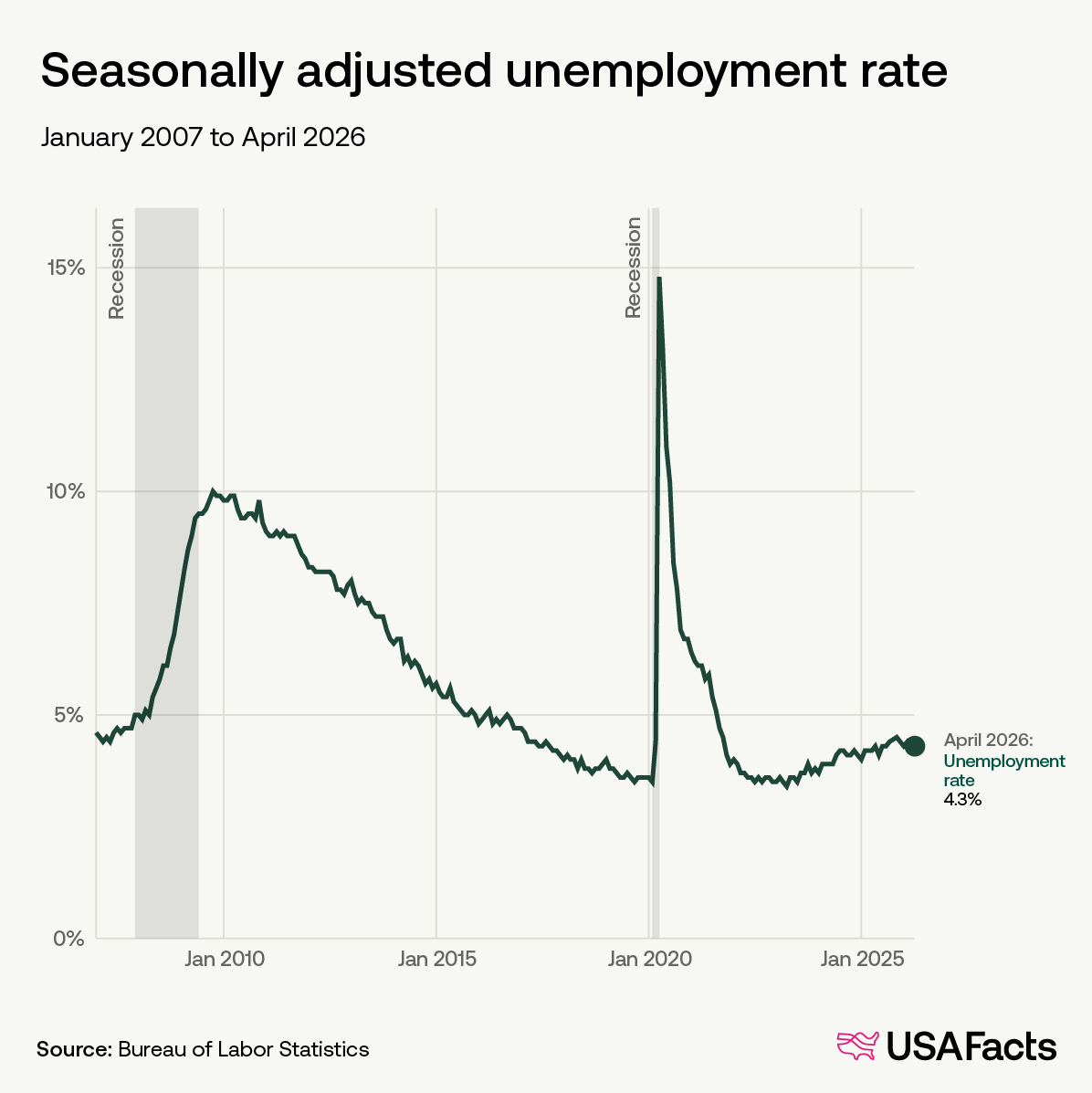
  • The Fed has five responsibilities. The one that affects you most directly is its mandate to conduct monetary policy to keep inflation in check and employment high. Through it, the Fed can influence interest rates across the entire economy. (Here are the other four.)  
Speaking of inflation
  • When the Fed lowers interest rates, it can lead to the running economy “hot.” It can make it cheaper for you to buy a house, get a car loan, or borrow money to open a business. But if money’s easier to borrow, it can fuel inflation.

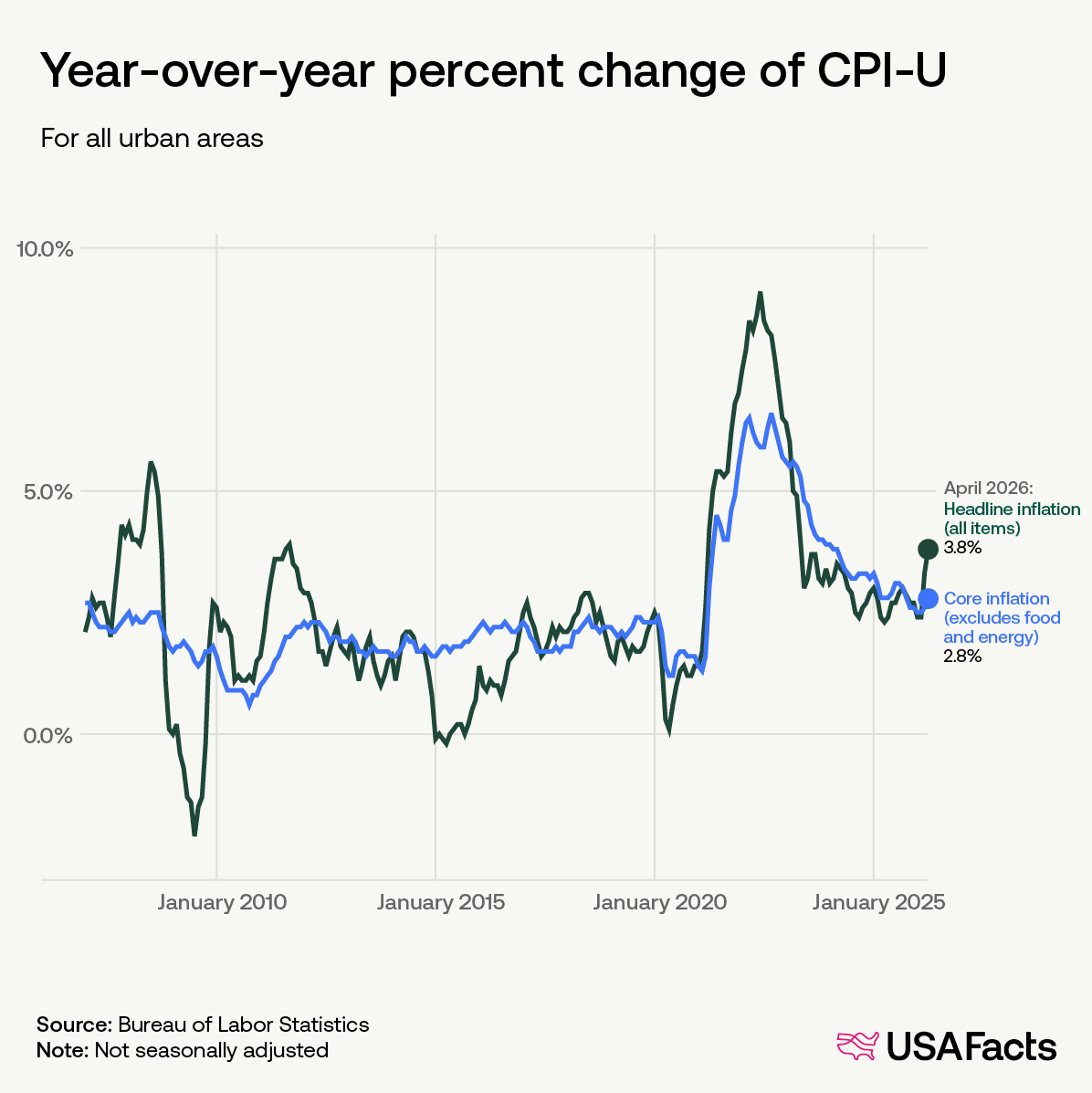
  • Last month’s inflation rate was 3.8%. The Bureau of Labor Statistics measures inflation through changes in the Consumer Price Index (CPI), a metric designed to track the price of a “basket of goods and services.” 
  • Think a dollar doesn't go as far as it used to? You're right. Track how the dollar’s value has changed with our inflation calculator! Explore the value from 1913 to now, or at any point in between.

  • Workers’ wages aren’t keeping up with inflation. Nominal wages rose 3.6% from April 2025 to April 2026, while prices grew 3.8%.

  • When the Fed raises interest rates, it can lead to the economy running “cold,” making things more expensive and slowing inflation. When borrowing is hard, it can slow the economy and drive up unemployment.  
How the Fed influences interest rates
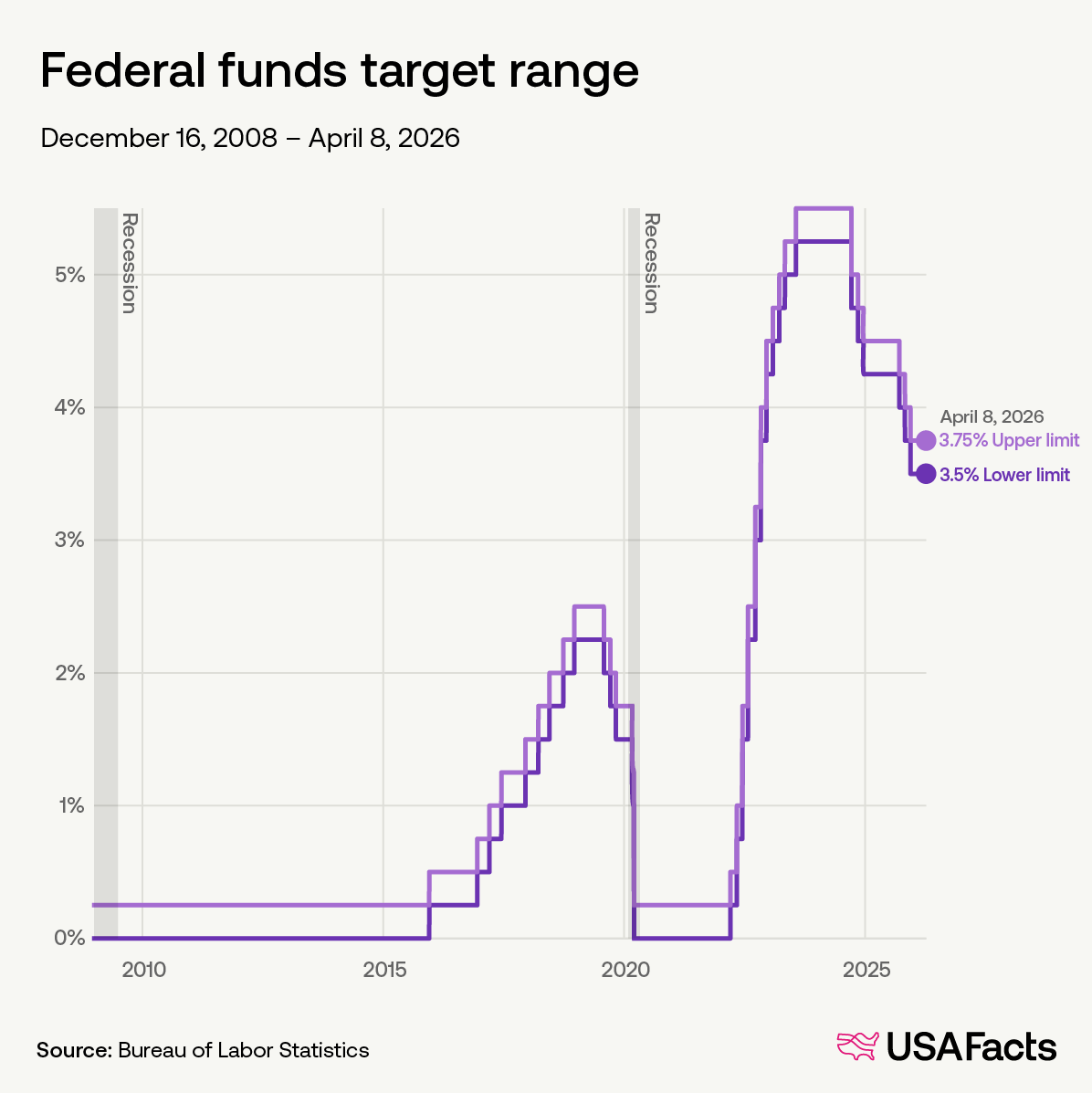
  • The Fed changes the interest it charges on loans it gives and pays on other banks' cash reserves it holds, effectively setting the limits at which other banks can charge interest. The average overnight rate at which banks transact is called the federal funds rate. Get a jargon-free explanation of the federal funds rate from Steve himself.
  • If the Fed raises the federal funds range, your bank’s costs go up. Your bank might raise interest rates on new loans. Mortgages, car loans, credit cards, and short-term business loans all get more expensive. That can ripple across the economy: people buy less, inflation can decrease as demand falls, less demand means companies may need fewer workers — causing unemployment to rise.

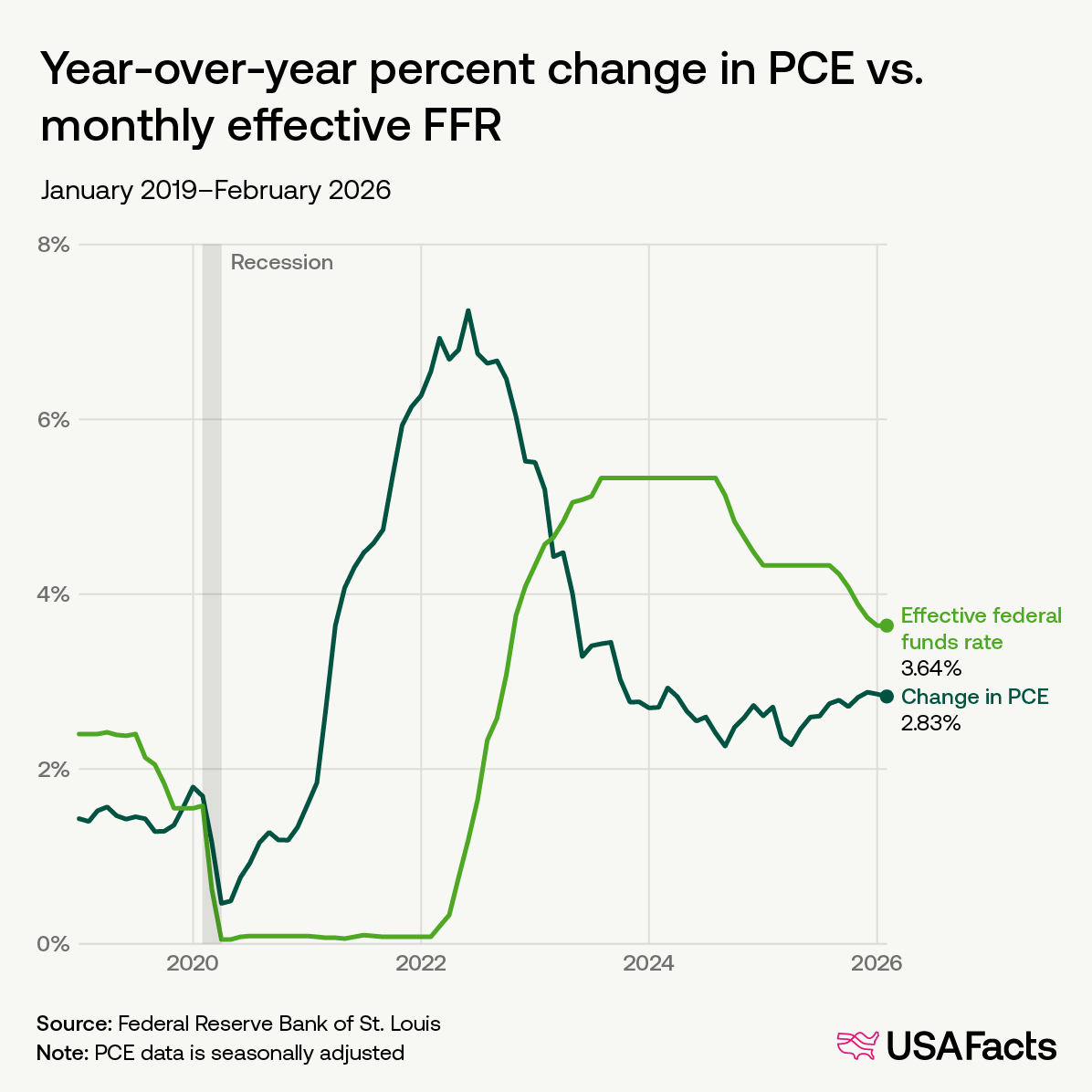
  • The federal funds rate target range has changed about 30 times in the last 10 years. In 2022, inflation climbed well above the Fed’s 2% goal. In response, the Fed raised the federal funds target range seven times in a single year. 
  • The Fed uses the Personal Consumption Expenditures Price Index (PCE) to measure inflation. The PCE tracks changes in the prices consumers pay across the economy. This differs somewhat from the CPI (the inflation measure most Americans are familiar with) because the two indexes use different methods and baskets of goods and services to calculate price changes.

  • Sometimes interest rate changes aren't enough, so the Fed uses other tools. One of them is to create money. (Sounds nice, right?) Here’s how
 
Thank you for joining us for this first Spotlight email! Watch the video now, then learn more about the Federal Reserve

Last Time an El Niño Was This Bad, It Killed 50 Million People

Last Time an El Niño Was This Bad, It Killed 50 Million People


Last Time an El Niño Was This Bad, It Killed 50 Million People
"It was arguably the worst environmental disaster to ever befall humanity."


By Joe Wilkins


Published May 14, 2026 8:57 AM EDT
Add Futurism(opens in a new tab)More information


Getty / Futurism


Sign up to see the future, today


Can’t-miss innovations from the bleeding edge of science and tech
Email addressSign Up


As if oil shortages, perpetual wars, and the existential angst of AI weren’t stressful enough, there’s an El Niño brewing — and it’s looking like it’ll be one of the most severe in over a century.

According to numerous weather models, this year’s El Niño — a prolonged climate event featuring unusually warm temperatures, which pops up every couple of years — could easily be the most severe we’ve ever experienced in the modern age. This year’s warm spell could supercharge ocean temperatures by as much as 5.4 degrees Fahrenheit, the Wall Street Journal reports, resulting in widespread droughts for some, floods for others, and perhaps most chillingly, chaos for global food supplies.

To find a historical equivalent, scientists have had to reach all the way back to 1877, when a merciless El Niño unleashed death on a scale few events can rival. Per the WSJ, the catastrophe fueled ongoing droughts, culminating in a global famine that killed at least 50 million people, though some estimates peg the loss of life at an even more horrifying 60 million — around 3 percent on the total population on Earth at the time.

As climate researchers wrote in a 2018 study of the famine: “it was arguably the worst environmental disaster to ever befall humanity and one of the worst calamities of any sort in at least the last 150 years, with a loss of life comparable to the World Wars and the influenza epidemic of 1918/19.”

As humanity has developed, some have suggested that events like the 1877 El Niño represent a stress test of our progress, finding weak points in our political and economic systems. With widespread poverty and colonial immiseration fueling massive famines throughout the 1800s, it’s safe to say we failed our 19th century test.

While we’ve certainly come a long way since then, cynics have plenty of talking points. This year’s El Niño will be coming on the back of widespread droughts, a debilitated food supply chain, and years of record-breaking ocean temperatures, to give just a few pressing examples.

Whether 2026 becomes another chapter in this cycle of preventable devastation depends on how we use the technology, resources, and knowledge at our disposal. While it may be easy to wave away the calamity faced by our ancestors as a footnote in time, the future is never certain, and history doesn’t grade on a curve.

More on climate events: Earth Screams in Agony as Microplastics Found to Increase Global Warming

Largest AI Cheating Scandal in Ivy League History

Brown University Professor Horrified to Discover Largest AI Cheating Scandal in Ivy League History
"The empirical evidence of fraud is overwhelming."


By Victor Tangermann


Published Jun 30, 2026 2:54 PM EDT
Add Futurism(opens in a new tab)More information


Shutterstock / Futurism


Sign up to see the future, today


Can’t-miss innovations from the bleeding edge of science and tech
Email addressSign Up

Award winning economist and Brown University professor Roberto Serrano says he has detected what appears to be the largest AI cheating scandal in Ivy League history.

As Spanish newspaper El País reports, Serrano noticed red flags as soon as he looked at the scores of a March midterm exam for one of the classes he teaches, an advanced undergrad course in mathematical economics.

The take-home and closed-book exam — an “Honor Code” type of test Ivy League schools are known for — resulted in 40 out of 86 students scoring a perfect 100. The average score was an equally questionable 96 out of 100.

In other words, it’s not a stretch to assume students gave in to the temptation to ask an AI chatbot for answers, particularly in the confines of their own homes without a teaching assistant looking over their shoulder. In Serrano’s testing, that appeared to be the case.

“Some answers contained unusual passages that coincided with results obtained after running the questions through ChatGPT,” Serrano told El País.

Perhaps most tellingly, the average score of an in-person final, which accounted for half of the final grade of the class, was an abysmal 48 out of 100. Of the 27 students who didn’t even bother to show up for the test, 22 had scored a 100 during the midterm exam, providing plenty of credence to Serrano’s theory.

“The empirical evidence of fraud is overwhelming,” he told the paper.

The incident highlights just how pervasive the use of AI has become in the classroom. Even students at highly reputable Ivy League schools are resorting to the tools to cheaply score high grades — even when doing so directly contradicts an honor code they all swore to uphold.

Compounding the concerning development, literacy and numeracy rates have taken a major hit over the last couple of years. College professors warn that we’re hitting a crisis point as incoming students barely have a middle-school level understanding of math and other subjects.

Some professors are lamenting that they’ve quickly become “plagiarism cops,” whose main job it is to root out AI-facilitated cheating instead of actually teaching. It’s a cat-and-mouse game greatly complicated by rapidly improving tech that’s making cheating harder to spot.

At the same time, experts warn that the use of the tools is destroying their students’ ability to think critically as they become hopelessly dependent on the tech.

It shouldn’t come as a surprise that Serrano has decided to stop giving take-home exams altogether.

A similar story is playing out at other Ivy League schools. As The Atlantic reported last month, Princeton recently stopped a 133-year-old “Honor Code” tradition involving professors leaving the room when students, who sign a pledge not to cheat, take their final exams.

Thanks to the dramatic uptick of AI use and academic dishonesty in the classroom, Princeton did away with the tradition altogether.

“There’s an air of people cheating on take-homes and people just using ChatGPT,” Princeton senior and former chair of the Honor Committee Nadia Makuc told The Atlantic. “As long as people think there is more cheating, it encourages more cheating.”

Beyond the loss of integrity, AI cheating is eroding the trust between students and educators, while the latter worry about the deteriorating value of a college degree.

“If we no longer defend truth and decency and honesty, then what kind of credibility are we going to have as academics?” Serrano told El País.

More on AI cheating: Princeton in Shambles Over AI Cheating

I Used to Work in Yosemite. No Reservation Rules

I Used to Work in Yosemite. This Is What the New No-Reservation Rules Really Do to the Park.


Outside Online · 4 hours ago
by awise · National Parks


On Saturday, May 2, I was walking through Camp 4 overflow parking lot in Yosemite National Park when my phone rang. “I just got ice cream, and I’m heading to El Cap Meadow to hang,” my friend Katy said. “Want to meet me there?”

I told her yes, but I’d be taking the bus. There was no chance in hell I’d drive my car and risk losing my parking spot.

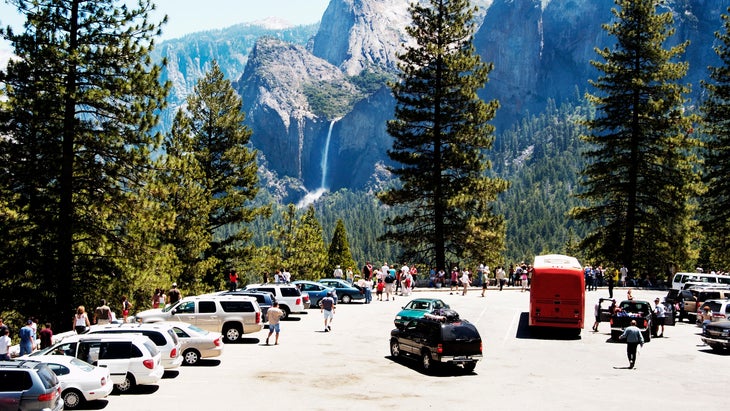
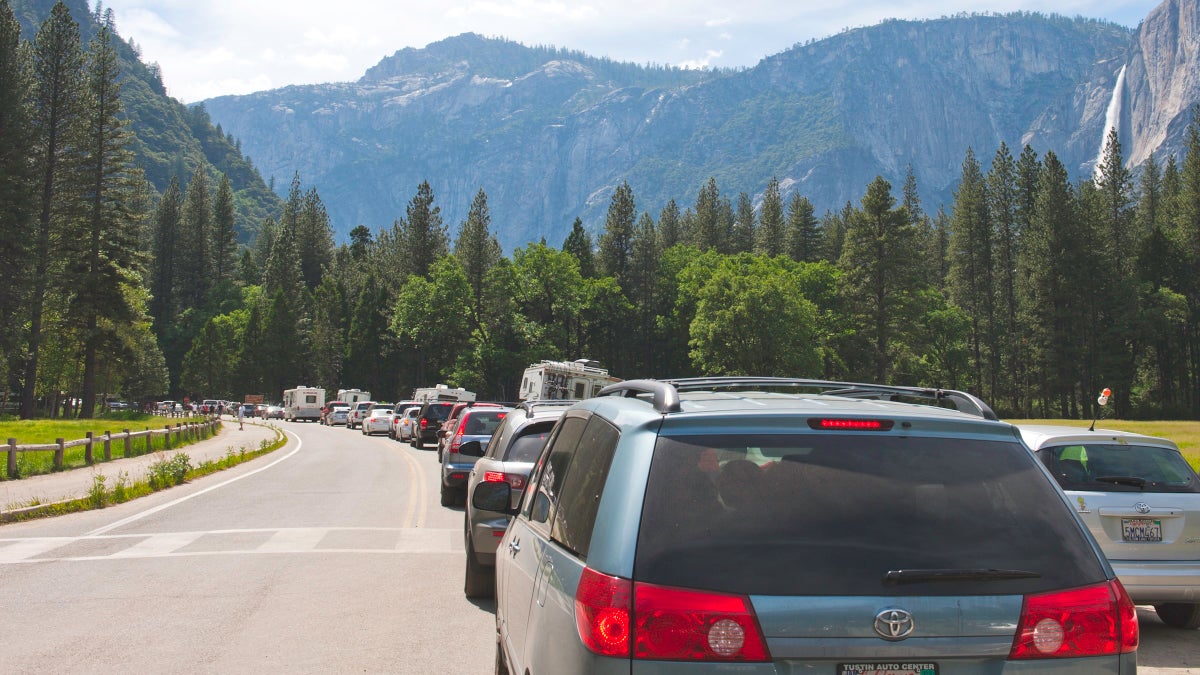
Yosemite’s parking lots that day, the first major weekend of a nervously anticipated season with no entry limits, could reasonably be described as apocalyptic. Cars squeezed between trees and rocks, onto curbs, and into the dirt on both sides of the road. On my 500-foot walk to the Lodge shuttle stop, five separate drivers flagged me down to ask if I was leaving the lot.

“Sorry!” I replied.

As I moved through the lot, the situation only got worse. The shuttle itself was trapped by an illegally parked car, which was being loaded onto a tow truck by the time I got in line. I counted two more tow trucks in the same lot, removing cars that were parked at odd angles. When I finally stepped onto the bus, I took a window seat and gaped at the line of cars parked along the roadside. It extended for the entire 1.8-mile stretch from Camp 4 to the El Cap picnic area.

Parking along this road is illegal, and every single driver was breaking the rules.

“This is crazy,” I told my partner. I couldn’t help but pity the hundreds of tourists who were getting ticketed, towed, or trapped on the road. What’s the point of driving all the way here if you can’t even get out of your car?Yosemite Valley overlook (Photo: photosbyjim / Getty)
Ditching Reservations Opens the Door for Crowds

For the past five years, Yosemite officials have conducted a careful set of experiments with a timed-entry reservation system, only to find its conclusions overridden by a federal order. Back in 2019, the park experienced 4.42 million visitors, its highest number since records began in 1906. In 2020, after the park shut down for three months, administrators introduced the first iteration of the reservation system in order to contain the spread of COVID-19. Day-use reservations were required for the majority of visitors. Anyone who didn’t book lodging in advance, enter via public transit, or have a wilderness or Half Dome permit needed a reservation. This continued throughout 2020 and 2021, shifting in 2022 to a “peak hours” reservation system for entrants between 6 A.M. and 4 P.M. each day.

Then, in 2023, Yosemite temporarily halted reservations, with an exception for the last three weekends of February, when the park usually gets slammed for Firefall. But doing away with the system had consequences. According to a 224-page NPS report on park visitation, the 2023 season saw “long lines at entrance stations and increased strain on the park’s employees, resources, and infrastructure.”

“I was here in 2023, and it was a shit show,” said one employee of the concessionaire Aramark, which oversees hospitality and food service in the park. The employee requested anonymity because they were not authorized to speak to the media. A survey conducted in 2023 found that 51 percent of visitors said they were negatively affected by parking shortages. An additional 26 percent said that crowding at restrooms and visitor centers negatively impacted their visit.

Having presumably learned their lesson in 2023, NPS officials brought back entry limits in 2024 and 2025 in a more limited, precise form: reservations would be required every day in the busy summer period, but only on weekends in the spring and fall. In August 2024, the park released a 224-page draft management plan that outlined and compared four different reservation systems, concluding that a parkwide reservation requirement during peak hours (5 A.M to 4 P.M.) would be the best option for managing the crowds. Already, the numbers were ticking up; 2025 saw 4.27 million visitors for Yosemite, nearly as many as before COVID-19.

In 2024, I worked in Yosemite as a Climber Steward, a position managed by the park’s nonprofit, Yosemite Conservancy, that offers advice and guidance to climbers. I came back to visit in June 2025, and both times, often drove between the park’s most crowded areas: Yosemite Village, Yosemite Lodge, Camp 4, and El Cap Meadow. Although lines were sometimes long, and I occasionally had trouble finding parking, I was never seriously delayed or hampered by the crowds. It seemed that Yosemite finally had its ideal rules to manage visitation capacity.

However, on April 3, 2025, Interior Secretary Doug Burgam ordered all national parks to remain “open and accessible.” Following that, on February 18, 2026, Yosemite Superintendent Ray McPadden announced that the NPS would do away with reservations in 2026. A March 2026 survey by the Yosemite Union showed that 85 percent of the 135 verified employee responses did not approve of Superintendent McPadden’s decision, predicting that no entry limit would lead to angry, disappointed, and exasperated guests who take out their frustrations on frontline workers. As of now, more than 300 staff members have publicly called for this decision to be reversed.
What to Expect

This spring, I returned to Yosemite to report on climbing for Outside’s sister publication, Climbing. Since the season’s opening, on Saturdays, I have seen the same clogged parking lots, miles-long entrance lines, and illegally parked cars that I saw on May 2. However, as summer approaches—and as monthly visitation nearly doubles between May and July—employees are steeling themselves for an unwinnable battle. In early May, one staff member in concessions told me that they predict the traditional Saturday crowding to become an everyday situation in June.

“Really?” I asked the worker, astounded. “Every single day?”

They nodded with a grim expression, the same I’d seen on every other Yosemite worker I’d asked about this topic: on guard and tired already.

Tourists are also feeling the impact of an unrestricted entrance policy. One visiting rock climber told me that the few restaurants in the park are overwhelmed by the crowds. During a recent trip to Curry Village, a collection of shops, lodges, and eateries near Half Dome, he saw hundreds of people waiting in line to get into the two restaurants. “I just got off Half Dome and went to Curry [Village] for a chill pizza moment,” he told me. “There were lines out the door everywhere; it was a total junk show. I had never seen this many people in my life.”
How to Visit Yosemite and Beat the Crowds

Amid the crowding and congestion, many readers may be planning to visit Yosemite National Park this summer. The good news is that, with some careful planning, you can sidestep the congestion. Here are four tips to hopefully save you some headaches during your visit.
1. Avoid Weekends, Especially Saturdays

Currently, Saturday is the only day when parking in Yosemite feels downright impossible. However, this will likely expand to Sunday, Friday, and beyond as the summer crowds draw nearer. For now, scheduling your visit from Monday to Thursday will give you the best chance of avoiding long entrance lines and full parking lots.

If you absolutely have to visit on a busy day, such as a Saturday or the upcoming Memorial Day weekend, it’s ideal to get to the entrance station in the early mornings (before 5 A.M.) or evenings (after 7 P.M.). You’re much better off getting an early start, entering without fuss, and finding a cool spot to nap by the river than being stuck for miles in a never-ending line.
2. Ditch Your Car for Public Transit

YARTS runs a bus service that splits from Yosemite Village in all directions: north to Sonora, west to Merced, south to Fresno, and east to Mammoth Lakes. Tickets run around $20 per person, and guess what? You won’t have to worry about parking at all.

Once you’re in the park, the Yosemite shuttle is free, although it only runs until 10 P.M. If you plan to be out after that, plan for a nice summer walk back to your camp spot.
3. Bring or Rent a Bike

If you have to put yourself through Yosemite’s parking hell, don’t make yourself do it more than once. Bring your own bike—I bought mine for $98 at Walmart, and you can get secondhand bikes for half that price on Facebook Marketplace—and get ready to hit all of Yosemite’s best tourist spots within just 10 to 15 minutes. Most of the Valley, especially the east side, features paved bike paths that pass under gorgeous redwood canopies. Honestly, biking is the most thrilling way to travel around Yosemite, even when it’s not crowded.

No bike, and no time to buy one? Yosemite offers daily bike rentals and helmets at the Lodge, Curry Village, and next to the Village Store, but beware: These can sell out within the first hour of the day, especially on weekends. A full day can cost up to $48, and all bikes must be returned by 6:45 P.M. Still, this beats spending most of your day looking for parking.
4. Pack Your Own Food

Some of the longest lines are at Yosemite’s few restaurants, especially during midday and after 5 P.M. To avoid this, it’s best to plan ahead and eat at camp or around the park. Instead of standing in line with a pager at Curry’s Pizza Deck, head to the Village Store early to grab your snacks. If they’re pre-cooked, stuff some utensils and blankets into your backpack and bike over to a lovely meadow or riverbank to enjoy it. If they need a proper grill, head back to your campsite and enjoy a group meal under the redwoods. Just make sure to observe proper Yosemite food storage, keeping it always in a bear box when you’re not around.

The post I Used to Work in Yosemite. This Is What the New No-Reservation Rules Really Do to the Park. appeared first on Outside Online.

New Haskell Library and Opera House Canadian entrance

New Haskell Library and Opera House Canadian entrance


Sherbrooke Record · 7 days ago
by Matthew Mccully · Community Interest

Record Staff (HB)

The Haskell Library and Opera House Board of Trustees is officially opening a brand-new Canadian entrance. This historic addition ensures uninterrupted access for Canadian patrons to the only library and opera house in the world deliberately built straddling an international border.

This construction follows an unexpected decision by U.S. authorities in March 2025, which restricted traditional Canadian access through the building’s historic main entrance.

For over a century, patrons from both countries entered through the same door without going through official border crossings. The new entrance preserves the institution’s founding mission: to serve as a shared cultural hub where borders disappear.

The opening ceremony for the new entrance will be on June 10, 2026 at 11a.m. at the location (1 Church Street, Stanstead), according to a press release from the Haskell. The inauguration is open to patrons, donors, the general public, media, and government representatives from both countries.

The Haskell structure has stood as a monument to international peace and community unity since 1904. While the events of 2025 presented an unprecedented challenge, the completion of this Canadian entrance is a testament to the unwavering commitment to the house’s patrons. The ribbon-cutting ceremony will include short speeches from board members and community leaders. It will be followed by a reception and guided tours of the facility.

Please subscribe to read more news like this, published every Friday

L’article New Haskell Library and Opera House Canadian entrance est apparu en premier sur Sherbrooke Record.

RG Richardson Communications News

I am a business economist with interests in international trade worldwide through politics, money and banking. Interactive Internet VoIP and secure eMail Communications. The author of RG Richardson City Guides has over 300 guides, including restaurants and finance.