RG Richardson Business & Economics

RG Richardson Business & Economics
Interactive financial ebooks

Blackstone is restricting withdrawals from its flagship Blackstone Private Credit

 Blackstone  is restricting withdrawals from its flagship Blackstone Private Credit, or BCRED, fund following a spike in investor redemption requests, as fears over liquidity pressures rattled private markets.

The asset management giant capped investor withdrawals from the $79 billion nontraded business development company at 5% of shares, after redemption requests hit 10% during the second quarter.

It comes after U.S. private markets giants sold off on Wednesday after Switzerland’s Partners Group said it was curbing redemption requests in one of its European private equity vehicles.

Partners Group said on Thursday it was prepared to restrict withdrawals in more of its funds, warning that the spike in client withdrawals is now spreading from private credit into private equity.

Shares in Blackstone were up more than 5% in late-morning trading Thursday. They fell about 4% on Wednesday during the sell-off.

Bitcoin is down horrendous

Illustration of bitcoin melting

Nick Iluzada

The world’s largest cryptocurrency is having the type of week that makes you post a Notes app apology on your Instagram story. Bitcoin fell for its fifth straight day yesterday, deepening a slump that has wiped out more than $160 billion of the coin’s market value since Monday.

For context, bitcoin started the week at nearly $74,000—a far cry from its October record of more than $126,000. Yesterday, it traded near $61,000, a four-month low.

What just happened? Strategy, a company that reshaped its whole business around hoarding bitcoin, disclosed on Monday that it sold some holdings for the second time ever. Though the company offloaded only a sliver (32 of its 843,706 coins), the move still spooked others into selling, because Strategy is the world’s largest corporate bitcoin holder, and it has typically followed a “never sell” mantra.

Strategy’s sale may have set off this week’s tumble, but…

…it’s not the main reason for bitcoin’s troubles

Since mid-May, investors have pulled more than $4 billion from bitcoin ETFs, marking their longest-ever streak of outflows. That’s a big deal, because “ETF flows are the primary driver of BTC price appreciation,” a Citi analyst told CNBC.

Analysts say several factors are causing the coin’s price to suffer, even as Big Tech carries the traditional stock market to new heights. Those include uncertainty from the war in Iran and concerns that a landmark crypto-friendly bill may not pass this year.

Another narrative is emerging: Investors appear to be withdrawing from bitcoin and other digital assets to invest in AI holdings instead, according to Bloomberg. Strategy’s chairman argued as much yesterday: “This is a capital rotation, not a bitcoin impairment,” he posted on X.

Looking ahead…some analysts think bitcoin is nearing the end of its bear market phase, which it cycles through every four or so years.


The people are pivoting

 The people are pivoting

Older man working in a startup office

Getty Images

If you’ve been spending company time browsing LinkedIn, you’re not alone—but you should probably consider getting a privacy screen. Nearly 80% of professionals in the US say they’re ready for a new job, and roughly half of that crowd is actively trying to switch fields this year, according to a recent survey by the job board site FlexJobs.

Why? Remote options, higher salaries, and better work-life balance are the top reasons that workers want to change up their careers, per the survey. But recent layoffs in tech and media have also forced some people to find new pastures.

Who’s switching up? Lots of millennials. The average age of a career pivot is ~39, but some Gen Xers also tend to hop around: Americans have held an average of 2.2 jobs between the ages of 45 and 54, according to government data.

How an aging workforce plays into all this

As life expectancy and the cost of living rise, more baby boomers are working longer to afford retirement, leaving fewer openings for young professionals.

According to workforce data firm Revelio Labs:

  • This phenomenon helped push the average age of American workers from 40.5 in 2022 to over 42 in 2025.
  • Fields that saw the biggest jump in average age over the past decade include insurance, sales, real estate, and the service industry.

Exceptions: Construction, plumbing, and other trade industries are facing an exodus of boomer retirees and a shortage of young, incoming workers. As data center build-outs boom, the recruiting firm Broadstaff has seen a spike in demand for electricians and technicians, providing a potential pivot for hundreds of thousands of tech workers who have been laid off since 2022.

Data readiness for agentic AI in financial services

 Data readiness for agentic AI in financial services


MIT Technology Review · 22 minutes ago
by MIT Technology Review Insights · Artificial intelligence


Financial services companies have unique needs when it comes to business AI. They operate in one of the most highly regulated sectors while responding to external events that are updated by the second. As a result, the success of agentic AI in financial services depends less on the sophistication of the system and more on the quality, security, and accessibility of the data it relies on. 

“It all starts with the data,” says Steve Mayzak, global managing director of Search AI at Elastic.

Agentic AI—systems that can independently plan and take actions to complete tasks, rather than simply generate responses—holds enormous potential for financial services due to its ability to incorporate real-time data and optimize complex workflows. Gartner has found that more than half of financial services teams have already implemented or plan to implement agentic AI.

However, introducing autonomous AI into any organization magnifies both the strengths and weaknesses of the underlying data it uses. To deploy agentic AI with speed, confidence, and control, financial services companies must first be able to search, secure, and contextualize their data at scale. “Agentic AI amplifies the weakest link in the chain: data availability and quality,” says Mayzak. “And your systems are only as good as their weakest link.”

Financial services companies, therefore, require a trusted and centralized data store that is easy to access, dependable, and can be managed at scale.
The high stakes of quality information

Regulation in the financial services sector requires a high degree of accountability for all data tools. As Mayzak says, “You can’t just stop at explaining where the data came from and what it was transformed into: ‘Here’s the data that went in, and this is what came out.’ You need an auditable and governable way to explain what information the model found and the logic of why that data was right for the next step.” That is, you need to be able to see, understand, and describe the underlying processes.

At the same time, financial services companies require speed and accuracy in order to meet customer expectations and stay ahead of competition. Markets are continually shifting, and risks and opportunities move along with them. If an AI model can parse natural language (unstructured data) from complex sources—in addition to structured data in spreadsheets that are easier to analyze—this gives users more relevant information.

In this environment, there is no tolerance for error, including the hallucinations that plagued early AI efforts. Agentic AI systems depend on rapid access to high-quality, well-governed data that is secure and accessible. In financial services, that data spans transactions, customer interactions, risk signals, policies, and historical context. The task of preparing that data for AI should not be underestimated. “Natural language is way more messy than structured data, and that makes the process of organizing and cleaning it up that much more important and also that much harder,” says Mayzak.

The data must be well indexed and consolidated across different locations, not locked in the silos of separate systems across the organization. Otherwise, AI agents lag, provide inconsistent answers, and produce decisions that are harder to trace and explain, undermining confidence among regulators, customers, and internal stakeholders.

As Mayzak says, “There are many different ways to describe how to execute a trade at a bank. In an agent-powered world, we need those descriptions to be deterministic—to give the same results every time. Yet we’re building on powerful but non-deterministic models. That’s incredibly tricky, but not impossible.”

For a financial services firm, managing this can be very challenging. A Forrester study found that 57% of financial organizations are still developing the necessary internal capabilities to fully leverage agentic AI. “The data exists in many different formats, created over the course of a bank’s history,” says Mayzak. “Take any bank that’s been around for 50 years: They might have 60 different types of PDFs for the exact same thing. And at the same time, we want the output of these systems to be 100% accurate. In many cases, there is no ‘good enough’.” That is, companies need to do it right, and the first time.
Searching and securing results

An effective search platform is key to solving the problem of fragmented, poorly indexed, inaccessible data. Financial services companies that can readily sift through both their structured and unstructured data, keep it secure, and apply it in the right context will get the most value from agentic AI. This often requires designing AI systems with data access and utility in mind so they can work faster and yield more accurate results, as well as reduce risk. “Search is the foundational technology that makes AI accurate and grounded in real data,” Mayzak says. “Search platforms have become the authoritative context and memory stores that will power this AI revolution.”

Once in place, these AI-enhanced searches and autonomous systems can serve financial services companies for a range of purposes. When monitoring client exposure, agentic AI can continuously scan transactions, market signals, and external data to detect emerging risks; platforms can then automatically flag or escalate issues in real time. In trade monitoring, AI agents can review trade workflows, identify discrepancies across different formats, and resolve exceptions step by step with minimal human intervention. In regulatory reporting, AI can gather data from across systems, generate required reports, and track how each output was produced. These applications of AI save time while supporting audit and compliance needs by being traceable and explainable.

Although such capabilities already exist, they are often manual, fragmented, and difficult to scale. Agentic AI allows financial organizations to move toward more automated, efficient, and scalable processes while maintaining the accuracy and transparency required in their highly regulated environment. As Mayzak says, “It’s not that different from how humans operate today, just done at a much faster pace and at scale.”
Building an agentic AI ecosystem

Launching agentic AI can be daunting, especially if other AI ventures have stalled internally. Mayzak’s recommendation is to choose a manageable use case and allow it to grow over time. “Success can build on success,” he says. “While companies may aim to automate a 70-step business process, they are discovering that you have to start somewhere. What is working in the market is tackling the problem one step at a time. Once you get the first step working, then you can take the next step, and the next.”

The financial services organizations that lead among their peers will be those that integrate agentic AI into a broader ecosystem that includes strong security controls, good data governance, and effective management of system performance. As Mayzak says, “Doing this well will create an AI feedback loop, where executives gain new signals from these systems to assess the effectiveness of their investments and generate reliable, actionable insights.” By iterating on pilots and continuously improving, companies will build agentic systems that can be measured, managed, and scaled. This will transform agentic AI into lasting competitive advantage.

Learn more about how Elastic supports financial services.


This content was produced by Insights, the custom content arm of MIT Technology Review. It was not written by MIT Technology Review’s editorial staff. It was researched, designed, and written by human writers, editors, analysts, and illustrators. This includes the writing of surveys and collection of data for surveys. AI tools that may have been used were limited to secondary production processes that passed thorough human review.

The K-shaped economy is trippin'

 The K-shaped economy is trippin’

Glass of champagne in front of an airplane window on a flight

Getty Images

If you’re wealthy, it’s a new golden age of travel. If you’re not wealthy, it’s gold-plated at best. Airlines and hotels are increasingly tailoring their services to the affluent, while everyone else fights for legroom and late checkouts—if they can afford the trip at all.

First-class operation: The growing delta between high-income and low-income travelers might be easiest to notice in…Delta. The airline, like American and United, has been directing resources toward its premium products, and the strategy is paying off. According to CNN:

  • Sales of Delta’s main cabin seats dropped 7% in 2025, year over year.
  • But business and first-class ticket sales rose 9%.

In fact, the airline’s premium ticket sales surpassed economy sales for the first time ever last year.

In the meantime, fares for everyone keep getting more expensive, due, in part, to the Iran war and higher fuel prices. That’s made it harder for low-cost airlines to stay in the black, since many of their customers are getting priced out. Earlier this month, Spirit, the poster child of budget flying, abruptly shut down, specifically citing fuel costs.

Suite dreams. A similar K-shaped trend is playing out in the hotel industry. According to JLL Research, from November 2024 to November 2025:

  • Luxury hotels saw a 2.9% gain in revenue per available room.
  • Midscale properties dropped 2.6%.
  • Economy hotels dropped 4.1%.

People are still traveling, though

Two-thirds of Americans plan to take a domestic trip or two this summer, according to US News. They’re simply leaning on perks like frequent flyer miles and hotel points, or spending their lunch breaks hitting refresh on deal sites.

Trading places: A lot of travelers are turning to “destination dupes,” which offer experiences similar to famous tourist hot spots, but for much cheaper. So, instead of Paris and Rome, people are checking out Brussels, Belgium, and Naples, Italy. And instead of Boston, people are probably just going to Dunkin’.

PBO Conquers the Island with Mike Golding and Sir Robin Knox-Johnston - Practical Boat Owner

PBO Conquers the Island with Mike Golding and Sir Robin Knox-Johnston - Practical Boat Owner

PBO Conquers the Island with Mike Golding and Sir Robin Knox-Johnston

Alison Wood
April 20, 2026
0shares


Two sailing legends raced each other this weekend in a landmark event crewed by novice sailors from the Little Ship Club


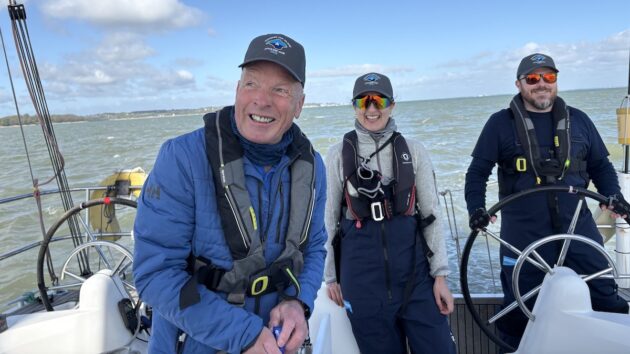
Mike Golding with Else-Marieke van de Spek and Lewis McDonald of the Little Ship Club
TAGS:


The inaugural Conquer the Island challenge, a 10-hour clockwise circumnavigation of the Isle of Wight, was organised by the historic London club, which this year celebrates its 100th anniversary.

PBO joined six of the 28 participants onboard Mermaid Spirit, a Jeanneau Sun Odyssey 410, skippered by Mike Golding OBE – the first person to sail around the world non-stop in both directions. Finishing just minutes behind, was Sir Robin Knox-Johnston, the first person to sail single-handed and non-stop around the world during the 1968-69 Golden Globe Race.

Little Ship Club skippers Simon Kaye and Henry Bennett Gough were thrilled to complete the race less than half an hour after the sailing heavyweights.


Mike Golding OBE and Sir Robin Knox-Johnston discuss tactics at the safety briefing in Gosport Marina. Credit Ali Wood

Mike Golding is the president of the Little Ship Club, and Sir Robin Knox-Johnston a previous president. At a dinner afterwards, hosted by Sunsail at the Island Sailing Club, the men gave a speech about the challenging 50-mile race, which navigates tidal gates, shallows, a wreck and commercial shipping.


Sir Robin Knox-Johnston, former president of the Little Ship Club with current president Mike Golding. Credit Ali Wood

Sir Robin joked about having a bucket tied to the rudder and being ‘a bit slow’ as they were busy gathering mussels from the hull.

“It was quite interesting tactics, and I was fortunate to have a very good crew,” he said. “Apart from great company onboard and a great sail, the highlight for us was finding ourselves up level with the president at the Needles, and saying, ‘guys we’ve got to slow down!”

To which, his old friend Mike Golding countered: “Like any good F1 driver, he’s rolling out with the excuses.”

Speaking seriously, Sir Robin congratulated the club on such a brilliant event. “I hope you all go back and tell everyone these events are fun. Go back and take it home, the Little Ship Club is the place to be.”


Cheers! A celebration Dark ‘N Stormy for Mike Golding, PBO’s Ali Wood and Little Ship Club members (clockwise) Bradley Baskett, Victoria Morton, Alexandra (Sasha) Henry, Lewis McDonald, Else-Marieke van der Spek and Jessica Haines

Although The Little Ship Club has no waterfront moorings, it hosts events for over 1,000 members, some based overseas, from its clubhouse in the heart of London. Members can also take their RYA theory courses. For many, such as Alexandra (Sasha) Henry and Lewis McDonald, who organised the event, it’s an opportunity for sailors of all ages to meet likeminded people in a city that can at times feel lonely.


“Conquer the Island was all about bridging the gap between the classroom and the cockpit,” said Sasha. “Our goal was simple: get sailors out on the water to learn, connect, and build lasting relationships.”


Alexandra (Sasha) Henry at the start of the Conquer the Island. Sir Robin Knox-Johnston’s yacht is in the background. Credit Ali Wood

Sasha’s husband Lewis said, “We thought let’s invite Sir Robin Knox-Johnston and Mike Golding. Why not? It’s a long-shot, but we’ve nothing to lose. Hopefully one would agree to join us. We couldn’t believe it when they both responded within 24 hours and said yes, of course!”

PBO’s Ali Wood, who took part in the event, said: “It was an honour to sail with two legendary skippers, and meet such a friendly bunch of young sailors from the city. Mike was cracking jokes and sharing anecdotes all the way around the course, but not for a minute did he take his eye off Sir Robin Knox-Johnston. He had us trimming constantly!”


Sir Robin Knox-Johnston coaching novice sailors from the Little Ship Club. Credit Ali Wood

Whilst racing, Ali took the opportunity to quiz Golding on his seamanship and practical skills, including the rescue of Alex Thomson in the Velux 5 Oceans race, how he made a jury rig in the Southern Ocean, and finished third in the 2004 Vendée Globe, despite having lost his keel.

Meanwhile, the rest of the crew from Mermaid Spirit – one of the four yachts chartered from Prometheus Sailing – became citizen scientists for the International SeaKeepers Society, logging hazards and pollution on the Eyesea global database. Happily there was little to report on this occasion.


Sir Robin Knox-Johnston shows PBO around his legendary 32ft ketch Suhaili. Credit Ali Wood

On the return voyage from Cowes, crews swapped boats and Ali was lucky enough to sail with Sir Robin Knox-Johnston and later visit Suhaili, the legendary 32ft teak ketch which took him on his record-breaking 1968–1969 circumnavigation.

Sir Robin’s top tip for keeping his teak decks clean? Washing powder!


Find out more in a future edition of Practical Boat Owner. The Little Ship Club is open to sailors, motorboaters and non-sailors alike from all over the world. Find out more at littleshipclub.co.uk

Australia win at SailGP New York

 Australia win at SailGP New York

It was a weekend of chaos for the SailGP league as teams competed May 30-31 in New York, USA. After excessive winds prevented racing on day one, the fleet had three fleet races to advance the top three teams for the winner-take-all Final.

Despite meager previous results in New York, Tom Slingsby’s BONDS Flying Roos (AUS) won their third consecutive event, holding off Emirates GBR on the Hudson River.

The Australians, who arrived in the United States as the form team in 2026, were forced to fight from behind on a brutally difficult final day, with patchy breeze and constant shifts turning the racecourse into a moving puzzle.

Slingsby admitted the team had been “on the back foot all day” before producing a decisive final-race performance when it mattered most. - Full report and video

Beer is back on the menu, boys

 Beer is back on the menu, boys

Cartoonish illustration of a hand holding up a big beer mug

Niv Bavarsky

A proverbial ladybug just landed on the cracking-a-cold-one business: The number of drinks sold by Anheuser-Busch, the world’s largest brewer, increased last quarter for the first time in three years, the company reported yesterday, surprising analysts and suggesting that a broader chill in the beer industry may be thawing.

“Cheers to beer,” AB InBev CEO Michel Doukeris said of the promising results, which also included better-than-expected 12% revenue growth. Major gains in Latin American markets drove the beer beat:

  • The brewer’s Brazil unit notched record growth in sales volumes, sending shares of the Sao Paulo-listed subsidiary soaring by their most in almost 27 years.
  • AB InBev, which owns Corona and Modelo (except in the US), also exceeded expectations in Mexico, overtaking rival Heineken in the region.

But…that wasn’t enough to turn beer sales positive for the whole continent. In what could be interpreted by Big Ten students as a challenge, overall North American beer sales continued to fall, as persistent inflation and shifting health trends kept US shoppers away from the alcohol aisle.

Good thing AB InBev has expanded into beer that doesn’t get you drunk—revenue from its non-alcohol beverages jumped 27% in the quarter.

Sign of the imbibing times?

Along with AB InBev…

  • The Danish brewer Carlsberg recently reported that its beer volumes turned positive after rolling downhill last year.
  • Heineken’s total volumes also grew last quarter after falling in 2025, but the breakthrough was buoyed by sales of mixers and ciders. Heineken’s beer volumes actually fell from the same time last year.

Looking ahead…AB InBev said it’ll beat out both of those rivals this year. Much like other brewers, the company that slings Budweiser, Bud Light, Stella Artois, and Michelob Ultra—now the best-selling beer in the US—expects a significant summertime boost from World Cup festivities.

Snowbirds to be grounded following 2026 season until new aircraft arrive


Snowbirds to be grounded following the 2026 season until new aircraft arrive
Replacement planes are expected to arrive in the early 2030s, but no precise date or numbers have been given.


Murray Brewster · CBC News · Posted: May 19, 2026 8:19 AM PDT | Last Updated: 7 hours ago


Listen to this article
Estimated 6 minutes

The Canadian Snowbirds fly during the Fleet Week Air Show in San Francisco on Oct. 10, 2025. (Godofredo A. VásquezAP)

Social Sharing


Canada’s iconic Snowbirds demonstration squadron will be grounded following the 2026 flying season until new aircraft arrive, the country’s defence minister said Tuesday.

Speaking to the media at the home of 431 Squadron in Moose Jaw, Sask., David McGuinty did not say precisely how long it will take to replace the outdated CT-114 Tutor jets, which have been part of the Royal Canadian Air Force inventory since the 1960s.

Nor did the minister say how many new aircraft will be ordered.

The Swiss-made, turbo-prop CT-157 Siskin II has been chosen to replace the Snowbird squadron. The planes are already on order and are being delivered for use as the air force’s initial pilot training aircraft.

McGuinty said a contract for the Snowbird replacement has yet to be negotiated.

"Negotiations are underway with the manufacturer and we intend to procure those aircraft as quickly as we possibly can," he said.

The intention appears to be to tack on extra aircraft to the existing order, which means it could be the early 2030s before the Snowbirds are reformed and back performing at air shows.
WATCH | Carney says he 'inherited' aging Snowbirds:


Carney says he 'inherited' aging Snowbirds as Ottawa moves to sideline fleet after 2026 season
May 19|
Duration1:13Prime Minister Mark Carney said Canada's iconic Snowbirds demonstration squadron will be grounded after the 2026 flying season for safety purposes until new aircraft arrive. 'I inherited a situation where the planes literally had come to the end of their lives,' Carney said.

Prime Minister Mark Carney, speaking at a separate event in Quebec on Tuesday, said he understood the place the squadron occcupies in the hearts of most Canadian, but added the aircraft should have been replaced a long time ago.

"They're extraordinary, but I inherited this situation where the planes are literally at the end of their lives," Carney said. "The Snowbirds will continue and new planes are being commissioned and will arrive. Sometimes you inherit things that, you know — you move as fast as you can."

Lt.-Gen. Jamie Speiser-Blanchet, commander of the Royal Canadian Air Force, acknowledged that temporarily standing down the squadron was a tough call to make.

"This is a significant moment, and it is an emotional one because of the extraordinary connection that this team has built with Canadians over more than five and a half decades," Speiser-Blanchet said. "This decision was not taken lightly."

The lull in operations coincides with the introduction of the F-35 fighter fleet, and comes as the air forces also faces a major pilot shortage.
Federal defence minister says Snowbirds' future secure, Canadians can 'rest assured'

McGuinty said that during the downtime, the air force will continue to support air shows across the country, but will likely have to draw from operational fleets.

An association representing former Snowbird pilots said that while it understood the federal government's decision, it was still "profoundly disappointing," and members worried how the gap will affect the unique expertise required to perform the demonstration flights.

After a few years' hiatus, the air force could be forced to start from scratch to rebuild the team, said retired colonel Dan Dempsey, a former commander of the squadron.

"While the [Snowbirds Alumni] Association acknowledges the government's commitment to equip the Snowbirds with the new aircraft platform in the future, concerns remain regarding the loss of operational expertise and the prolonged interruption of one of Canada's most important military outreach programs during the transition," Dempsey sa

Dempsey also praised the technicians and contractors who've kept the CT-114 Tutor jets flying throughout the decades.

The association is also unhappy that a turbo-prop plane has been selected rather than a jet. Other G7 countries maintain air demonstration teams, but they fly jet aircraft.
'Engineering challenges' prevent extension

Two years ago, former defence minister Bill Blair ordered a review of military ships, aircraft and other items that have become difficult and costly to maintain — including the Snowbird squadron.

At the time, he said the six-decade-old CT-114 Tutor jets had been in service too long.

In 2020, work began to extend the life of the Tutor jets until 2030, but Speiser-Blanchet said that while most of the upgrades were delivered, it simply wasn't possible to carry on beyond this year.
WATCH | Snowbirds to be grounded for years after 2026:


Iconic Snowbirds to be grounded after 2026 season
10 hours ago|
Duration2:47Canada’s iconic Snowbirds will be grounded after the 2026 season until their outdated jets get replaced, possibly by the early 2030s, marking a turning point for Canada's iconic aerial ambassadors after more than five decades.

"Some of the airframe, engine and escape system program feasibility studies [that] were done ... [revealed] some engineering challenges because of the age of the aircraft that have changed that situation, and this is why it will be retiring in 2027 instead of 2030."

Military officials and aviation experts have warned for decades that the Tutors were operating far beyond their intended lifespan.

The jets were first ordered by the military in 1961 as training aircraft, a role from which they were retired in the early 2000s. Of the 191 planes originally ordered, roughly 26 are thought to remain in inventory or in storage.

The CT-114s began their demonstration career in 1967. They adopted the name Snowbirds in 1972 after a national competition among school children to name the squadron, and were formally designated as an aerobatics team in 1975.

In 2003, the air force was told that it needed to quickly replace the Tutors, which were considered well-maintained but ancient.

A study by the Defence Department's director of major service delivery procurement warned at the time that their lifespan would expire in 2010, but could be extended for another decade if absolutely necessary. Keeping the Tutor would pose "significant" risks, the 2003 report warned.

The Snowbirds kept flying, however.

A DND report in the fall of 2014 cleared the fleet as "technically airworthy," but noted significant concerns including some caused by financial restraints. That same evaluation said the Tutors could have had their lives extended to 2025.

Dave Perry, a defence analyst, said the decision to suspend the Snowbirds isn't surprising given the mutiple pressures the air force in facing, including introducing a wide range of new aircraft, and doing so with a shortage of personnel.

"You have to make some tough calls," said Perry, president of the Canadian Global Affairs Institute. "And I think this is probably one of those things, if they're really knuckle down, you could have kept that fleet going. But does it really make that much sense?"

ABOUT THE AUTHOR


Murray Brewster

Senior reporter, defence and security

Murray Brewster is senior defence writer for CBC News, based in Ottawa. He has covered the Canadian military and foreign policy from Parliament Hill for over a decade. Among other assignments, he spent a total of 15 months on the ground covering the Afghan war for The Canadian Press. Prior to that, he covered defence issues and politics for CP in Nova Scotia for 11 years and was bureau chief for Standard Broadcast News in Ottawa.

Canada Should Be Leading a Geothermal Power Boom


Canada Should Be Leading a Geothermal Power Boom
We have all it takes to wake a sleeping giant of clean energy. What’s in the way?

Rebecca Pearce TodayThe Tyee

Canadian geophysicist Rebecca Pearce is the science lead with the Cascade Institute’s Ultradeep Geothermal program at Royal Roads University.Our journalism is supported by readers like you. Click here to support The Tyee.

SHARE:


11
Oregon’s Newberry project uses Canadian expertise to show geothermal energy is far more doable than before. Photo via Newberry project.


Listen to this article
5 min


A day’s drive south of Vancouver, on the slopes of the Newberry Volcano in Oregon, a groundbreaking geothermal project has demonstrated the commercial viability of generating clean, secure electricity from hot dry rock.

Announcements, Events & more from Tyee and select partners
Hear Rachel Gilmore and More: A Tyee Event on Battling Online Lies

We’re calling it Reality Check LIVE. Get your ticket for May 21 in Vancouver.
The Tyee Is Recruiting Our Next Editor-in-Chief

Founding editor David Beers is passing the baton to a new leader. Is it you?

And this was achieved in subsurface conditions that occur here in Canada, with Canadian experts, using a drilling rig brought in from Grande Prairie, Alberta.

The Newberry project, led by Mazama Energy with funding from the U.S. Department of Energy, has successfully created an enhanced geothermal system that circulates water through hard rock at record-breaking temperatures of 331 C.

This project represents a major milestone towards producing geothermal energy from water hotter than 375 C, where water changes to a supercritical state that carries five times more energy than the subcritical water typically circulated in geothermal projects.

Enhanced geothermal systems generate electricity by using a pair of wells to circulate water through deep, hard rock, where it absorbs heat and then flows back to the surface to drive a turbine. These systems artificially create a geothermal reservoir several kilometres underground, making geothermal possible all over the world, rather than in select regions where geothermal reservoirs naturally occur.

Newberry is a successful proof of concept that this technology works, made possible by Canadian firms such as Pro-Pipe Service, Ensign Energy Services, Hephae and others. Yet none of these breakthroughs are occurring in Canada.

How is it that, despite our world-class expertise and abundant heat resources, Canada still does not have a single stand-alone geothermal power plant anywhere in the country? This is a classic example of how Canadian expertise is outsourced to other countries, aiding in major technological breakthroughs and economic development abroad, while our own domestic energy strategies stagnate.

Canadians are world-renowned for their drilling and subsurface development expertise, including for geothermal projects. One of the two lead researchers on Utah’s groundbreaking research initiative, the Frontier Observatory for Research in Geothermal Energy, John McLennan, is a Canadian engineer. And the Calgary-based geothermal firm Eavor just brought its flagship closed-loop heat and electricity project online — in Geretsried, Germany.

Clearly, we have the skills to unlock geothermal energy. And we have the heat, too.

The United States is the largest producer of geothermal electricity in the world, and most of those 3.9 gigawatts are produced in the Cascade Volcanic Arc that spans the western states — California, Idaho, Utah and Washington (think Mount St. Helens). Geology doesn’t stop at the border: these volcanic mountain ranges run all the way through B.C., Yukon and Alaska.


Will BC Electrify Its Economy? BC Hydro Doubts Itread more

B.C. is particularly blessed with near-surface geothermal resources like those found at the Newberry project. Since the 1970s, a series of studies by the Geological Survey of Canada has identified optimal locations for geothermal all across the province. One such site is Mount Meager, near Pemberton, where temperatures of 290 C were measured only three kilometres below the surface. In geothermal terms, that is like striking gold.

B.C. is primed to be a hotbed of geothermal innovation. To kick-start that innovation, we need a network of federal/provincial research facilities, with industry buy-in, to ultimately supply the province with clean, baseload power with minimal surface footprint. And the return on investment would be immense.

The Clean Air Task Force estimates that one per cent of the world’s superhot rock energy within eight kilometres of the surface would provide 68 terawatts of energy, eight times today’s total global electricity consumption. By pairing B.C.’s rich geothermal resources with Canadian subsurface engineering, Canada could unleash this novel energy supply at a critical moment of global energy insecurity.


How Can Canada Help Workers Through a Green Transition?read more

And the opportunity isn’t limited to superhot rock. As the Cascade Institute’s recent report “The Deep Heat Advantage” reveals, continued innovation in harnessing geothermal from the mid-range temperatures found in Alberta, Saskatchewan and the Northwest Territories could make geothermal competitive with solar and combined-cycle gas power. Canadian-led advancements in drilling, well design and reservoir creation technologies in our diverse range of geologies will bring us closer to the Earthshot of clean, secure baseload power, anywhere.

Canada has a competitive edge in geothermal energy — one that can truly make us an energy superpower. By deploying our own expertise towards geothermal innovation across our broad spectrum of geological settings, we can unlock vast resources of clean, firm, renewable heat and power. Canadians are already doing this around the world. It’s time to turn this expertise towards our own resources.

It’s time to wake the sleeping giant of Canadian geothermal.


Read more: Energy, Environment

Harvard deciding whether to give fewer A’s

  Harvard deciding whether to give fewer A’s

An aerial view of Harvard's campus

Brooks Kraft LLC/Getty Images

A type of inflation unrelated to the price of a Dunkin’ coffee is on the ballot at that one school “in Boston.” A Harvard faculty committee began a weeklong vote yesterday on whether to cap the number of A’s allowed per course in a bid to combat grade inflation.

The measure would limit professors to giving A grades to just a fifth of the class, plus four extra students. A rule that would tie honors to class rank instead of GPA is also on the ballot.

Make A’s great again

The proposed changes come as some faculty and external critics—including the Trump administration—say that A’s becoming more common than nepo babies on Ivy League campuses eroded the grade’s value as a marker of excellence.

  • A’s accounted for 60% of grades awarded to Harvard undergrads last year, compared with 25% in 2005.
  • Last year, 55 Harvard students tied for the school’s top GPA award, an honor that used to be clinched by one or two students per year.

Proponents of A austerity say it’ll motivate students to work harder, while making it easier for employers and grad schools to gauge their performance. But many undergrads and some faculty oppose mandated A scarcity, claiming it’ll pit classmates against each other and hurt Harvard students’ competitiveness.

Big picture: Supporters hope a grading overhaul at Harvard will spur other top schools to curb grade inflation.

Ten Commandments of Beercan Racing

 Ten Commandments of Beercan Racing

Rob Moore was only 58 years old when he succumbed to lung cancer on January 6, 2012. He was among the 20% of lung cancer victims with no history of smoking. During Rob's short tenure on the planet, he covered a lot of ground, and was both active in the sport and a popular contributor at the Latitude 38 publication.

Rob believed strongly that sailboat racing should be competitive and fun, and to encourage participation at all levels. To facilitate this desire, he penned the “Ten Commandments of Beercan Racing" which we annually share in his honor:

I) Thou shalt not take anything other than safety too seriously. If you can only remember one commandment, this is the one. Relax, have fun, and keep it light. Late to the start? So what. Over early? Big deal. No instructions? Improvise. Too windy? Quit. Not enough wind? Break out the beer. The point is to have fun, but stay safe. Like the ad says, "Safe boating is no accident." - Full report

It's crunch time for Canada's trade deal with the U.S. and Mexico

It's crunch time for Canada's trade deal with the U.S. and Mexico
Signs of life appear in talks on renewing CUSMA despite Trump administration's hard line on tariffs


Mike Crawley · CBC News · Posted: May 28, 2026 1:00 AM PDT | Last Updated: 5 hours ago


Listen to this article
Estimated 7 minutes

The Canada-U.S.-Mexico Agreement is up for a joint review on July 1 that will determine whether the deal is renewed or renegotiated. While the U.S. and Mexico are currently in talks and have two more rounds of meetings scheduled in the coming weeks, Canada and the U.S. have yet to begin formal negotiations. (Darryl Dyck/The Canadian Press)

Social Sharing


Sluggish trade negotiations between Canada and the U.S. are finally showing faint signs of life as a milestone looms for renewal of their three-way trade deal with Mexico.

The minister responsible for Canada-U.S. trade, Dominic LeBlanc, is planning to travel to Washington, D.C., for trade talks, although his spokespeople haven't confirmed a date.

Although the Canada-U.S.-Mexico Agreement (CUSMA) is due for its first-ever joint review on July 1, LeBlanc has held just one day of in-person talks over the past seven months with his Trump administration counterpart, U.S. Trade Representative Jamieson Greer.

The slow pace of negotiations, along with the way U.S. President Donald Trump's tariff regime has punched holes in the free-trade deal, have combined to raise doubts about the fate of an agreement that is crucial to the Canadian economy.
CUSMA talks may run past July 1 deadline, U.S. trade envoy saysJuly 1 date for CUSMA review a 'checkpoint ... not a cliff,' Canada's chief negotiator says

CUSMA covers roughly $1.3 trillion in annual Canada-U.S. trade in goods and services and currently shields a large swathe of Canadian exports from Trump's tariffs.

According to the text of the agreement, the three countries are to notify each other of changes they want made by next Monday, one month ahead of the formal review, which comes six years after the sweeping trade deal took effect.
WATCH | Top U.S. negotiator criticizes Canada's approach to trade talks:


Trump's trade rep calls out Canada for retaliating against tariffs
11 hours ago|
Duration0:54U.S. Trade Representative Jamieson Greer, the top trade official in the Trump administration, told an audience in Washington, D.C., on Tuesday that Canada is 'in a different spot' from other countries when it comes to negotiating trade deals. Greer said only two countries in the world chose to retaliate against the U.S. over tariffs: Canada and the People's Republic of China.

The U.S. and Mexico are holding two days of bilateral talks on CUSMA starting today and have scheduled two further rounds of negotiations in June and July.

Meanwhile, Greer is portraying Canada as far more recalcitrant in coming to the table — at least on terms acceptable to the Trump administration.
Greer criticizes Canada's retaliation on tariffs

"Canada's approach has been different," Greer told an audience at the Council on Foreign Relations in Washington on Tuesday.

"We've spent the past year and a half going to countries telling them we have to have some level of tariffs.

"Two countries in the world retaliated against us: the People's Republic of China and Canada. So they're just in a different spot, and it's hard to see necessarily where that ends."
AnalysisU.S. businesses love CUSMA. Why is Donald Trump threatening to pull out?FRONT BURNERWhy aren’t Canada and the U.S. officially talking trade?

The Carney government has looked to the CUSMA renewal talks as an opportunity to negotiate relief from Trump's tariffs.

In contrast, Greer and other Trump administration officials have repeatedly insisted that tariffs will be a fact of life for Canada, regardless of the free-trade deal.

Prime Minister Mark Carney and his minister responsible for Canada-U.S. trade, Dominic LeBlanc, leave a Liberal caucus meeting on Parliament Hill on Wednesday. (Spencer Colby/The Canadian Press)

The U.S. has also indicated it wants concessions from Canada — described by multiple sources as an "entry fee" — before it will begin substantive negotiations on CUSMA, Radio-Canada reported in April.

Those concessions include ending provincial boycotts of U.S. alcohol sales and scrapping the federal Online Streaming Act, which requires large providers like Netflix and Disney+ to contribute a share of their revenue to support the production of Canadian content.

"We have been clear and consistent with the United States that we are ready to launch the joint review the moment they are," LeBlanc's press secretary, Gabriel Brunet, said Wednesday in an email to CBC News.
Ottawa seeking 'real relief' from tariffs

Canada has put forward proposals with "the potential to generate hundreds of billions of dollars in economic value for American industries and workers in exchange for real relief from the unfair tariffs imposed on Canadian products," Brunet said.

So far, the only tariff relief the Trump administration is offering to Canada would apply only to steel and aluminum companies that commit to move production to the U.S.
Washington demanding 'entry fee' from Ottawa before trade talks: sourcesAnalysisHere are Canada's biggest points of leverage in tariff and trade talks with the U.S.

Eric Miller, a Canada-U.S. trade expert based in Washington, says the two countries have "some pretty fundamental areas of disagreement" before they can get down to the nitty-gritty of negotiating specific trade-offs.

"I think it's important that Canada move as quickly as possible to try to get a deal, but not in such a way that it is willing to take any deal," Miller told CBC News.
WATCH | Trump's envoy in Ottawa says Canada shouldn't expect freedom from tariffs:


Canada should expect tariffs to continue, U.S. ambassador says
May 24|
Duration2:41U.S. Ambassador Pete Hoekstra said the president has imposed tariffs on the whole world and Canada shouldn't expect to be an exception. The comments come as renewed discussion of Canada's Online Streaming Act adds to ongoing cross-border tension.

"Anybody can negotiate a bad deal quickly. But what Canada needs is a good deal," said Miller, president of Rideau Potomac Strategy Group, a consulting firm.

Miller does not believe it's particularly significant that Mexico is currently further ahead in its CUSMA renewal talks than Canada. However, he says the significance ramps up if Mexico reaches its own separate deal with the U.S., without Canada soon doing the same.

Mexico and Canada have been communicating directly about trade, although their annual two-way commerce in goods is around $56 billion, a mere fraction of each country's trade with the U.S.
Which Trump tariffs affect Canada now?Trump's man in Ottawa doesn't understand why Canadians are so frustrated right now

Any country can withdraw from CUSMA by giving six months' notice. Such a withdrawal by the U.S. would end the tariff exemption currently granted to most Canadian exports.

"President Trump is notoriously fickle and he could wake up and decide, 'You know what? I don't want to do this [tariff exemption] anymore', " Miller said.

Trump was in his first term as president when the U.S., Canada and Mexico negotiated CUSMA as a successor to the North American Free Trade Agreement. At the time, Trump hailed it as "the largest, most significant, modern, and balanced trade agreement in history."


Christopher Sands, director of the Center for Canadian Studies at Johns Hopkins University, says that when Trump has threatened to withdraw from CUSMA, something he first floated last fall, it's a bargaining tactic to try to win more concessions.

"Canada can play it cool, I think, as long as no one is actually withdrawing," Sands said in an interview.

"I think the U.S. is just going to keep trying to heap pressure on everyone to get as many concessions as possible before it says, 'Yes, we'll renew'," he said.
Canada must 'hold its ground': former negotiator

Steve Verheul, who was Canada's chief negotiator in the talks that led to the creation of CUSMA, says the review will have a profound impact on the country's economic future. He's urging the federal government to resist U.S. pressure for concessions.

"The U.S. is blaming Canada for the lack of movement, but the U.S. is putting Canada in a position where it has little room to move," Verheul said Wednesday on Parliament Hill, where he testified before the Senate committee on foreign affairs and international trade.

Verheul said there is broad support among Republicans in Congress, U.S. businesses and the American public for renewing the agreement.

"Over time, I believe pressures on the U.S. to come to a resolution will increase," Verheul told the Senate committee. "As uncomfortable as it may be, Canada needs to hold its ground."
Carney says U.S. trade talks will 'take some time,' vows Trump won't dictate the termsCarney names advisory committee on Canada-U.S. economic relations as CUSMA review nears

It's not precisely clear how the Canada-U.S. trade talks will proceed.

LeBlanc's press secretary declined to give any details of the minister's upcoming trip to Washington, including dates, who he'll be meeting with or the scope of any scheduled talks.

A spokesperson for the Office of the U.S. Trade Representative did not respond to a CBC News query on Wednesday about Greer's plans for negotiating with Canada.

CorrectionsA previous version of this story said that Dominic LeBlanc will travel to Washington next week. In fact, LeBlanc's spokesperson did not specify when the minister's trip will take place.
May 28, 2026 5:14 AM PDT

ABOUT THE AUTHOR


Mike Crawley

Correspondent

Mike Crawley is a correspondent for CBC News, based in Washington. He began his career as a newspaper reporter in B.C., spent six years as a freelance journalist in various parts of Africa, then joined the CBC in 2005. Mike reported on Ontario politics for 15 years. He was born and raised in Saint John, N.B.


Who is John Ternus, the new CEO of Apple?

  Who is John Ternus, the new CEO of Apple?

John Ternus

Christoph Dernbach/Getty Images

Apple’s incoming CEO John Ternus likely won’t harness the rockstar innovation vibes of Steve Jobs, slinging sleek new devices to an auditorium of fans. But he probably won’t take the quieter style of Tim Cook, who revolutionized the company’s supply chain and boosted its market cap from $300 billion to $4 trillion in 15 years, either.

So…what will the Ternus era at Apple look like when he takes over for Cook in September?

There are some hints in his already decades-long Apple tenure. Ternus, a mechanical engineer, has worked at the company since 2001 and served as the Senior VP for hardware engineering. Employees at the company reportedly really seem to like him: He’s decisive, focused, a good collaborator, and has been known to rise above the internal drama that plagued Apple’s early years.

He’s also overseen a number of iconic products and hardware revamps at the company:

  • Ternus was one of the execs that helped develop AirPods and facilitated Mac computers’ switch to using Apple’s own chips.
  • He pushed for the MacBook Neo—the cheaper, colorful laptop—that Apple rolled out last month (which sold out almost immediately).

But what can a hardware nerd do in the AI race?

Critics argue Apple has been slow to make AI advancements, falling behind competitors. Fans, however, credit the tech giant for letting other companies dump hundreds of billions into data centers and LLMs that Apple can just run on its devices. Some AI truthers think the tech will transform the industry, potentially wiping out the need for iPhones altogether. In that case, it may be a good idea to have the hardware guy at the helm.

Ternus reportedly reorganized the company’s hardware engineering department earlier this month to prepare it for faster AI product development.

Looking ahead…after a handful of product flops, like the Vision Pro and the autonomous car, Apple has its sights set on big AI-powered launches: a more chatbot-like Siri, wearables, and smart home devices. And don’t forget the company is going to fold the iPhone in half.

An Amendment to our Agreement!

OpenAI shakes up partnership with Microsoft, capping revenue share payments
Published Mon, Apr 27 20269:03 AM EDTUpdated 2 Min Ago

Ashley Capoot@/in/ashley-capoot/WATCH LIVE
Key Points
OpenAI and Microsoft announced major changes to their working relationship.
Microsoft’s license to OpenAI intellectual property will no longer be exclusive.
OpenAI will keep paying a revenue share to Microsoft, but Microsoft will stop paying one to OpenAI.

In this articleAMZN-2.84 (-1.08%)
GOOGL+4.21 (+1.22%)
CRWV-2.71 (-2.46%)
NBIS-2.82 (-1.92%)
Follow your favorite stocksCREATE FREE ACCOUNT

CEO of OpenAI Sam Altman speaks during the 2026 Infrastructure Summit of government officials, corporate executives, and labor leaders, in Washington, D.C., U.S., March 11, 2026.
Kylie Cooper | Reuters


OpenAI and Microsoft on Monday announced a revamped partnership agreement that will allow the artificial intelligence company to cap revenue share payments and serve customers across any cloud provider.

As part of the new agreement, the companies said revenue share payments from OpenAI to Microsoft will be “subject to a total cap,” but they will continue through 2030, “independent of OpenAI’s technology progress.” Microsoft no longer needs to determine its response if OpenAI finds that it has reached artificial general intelligence, or AGI, which is a term for an AI system that rivals or exceeds human intelligence.


The revenue sharing agreement between the two companies has existed for years. OpenAI will pay Microsoft at the same percentage, which is 20%, as part of the new deal, according to a source familiar with agreement who asked not to be named because the details are confidential. Microsoft will no longer pay a revenue share to OpenAI, according to a blog post.

The two companies said Microsoft remains OpenAI’s primary cloud provider, and that OpenAI products will ship first on Azure unless Microsoft decides otherwise. However, OpenAI can now serve “all of its products” to customers across any provider, including Microsoft rivals Amazon and Google.

Microsoft has been one of OpenAI’s longtime backers, investing more than $13 billion in the company since 2019. The companies have continued to tout their relationship as core and strategic, but it’s shown signs of strain in recent months as the partners move onto the other’s turf. In a memo earlier this month, Denise Dresser, OpenAI’s revenue chief, said the partnership has “limited our ability to meet enterprises where they are.”

“Today, we are announcing an amended agreement to simplify our partnership and the way we work together, grounded in flexibility, certainty, and a focus on delivering the benefits of AI broadly,” OpenAI said.

Microsoft will continue to have a license to OpenAI’s intellectual property on AI models through 2032, although the license will no longer be exclusive, the two companies said.


Shares of Microsoft are down roughly 1% on Monday.

The revamped partnership comes after Microsoft and OpenAI announced a series of changes to their agreement in October, when OpenAI completed a recapitalization and committed to spending $250 billion on Microsoft Azure cloud services. As part of that announcement, Microsoft said its investment for-profit arm was valued at $135 billion, or roughly 27% of the company on an as-converted diluted basis.

But in the months since, OpenAI has been looking to diversify its reach, striking multi-billion dollar deals with Microsoft competitors like Amazon. Model developers are seeing customers run AI agents that carry out tasks over several hours. In recent weeks Meta committed to spending $48 billion with cloud providers CoreWeave and Nebius to supplement its own computing power.

Amazon and OpenAI formed a major strategic partnership in February, and Amazon agreed to invest up to $50 billion in the company as part of that agreement. OpenAI said it would expand its existing $38 billion agreement with Amazon Web Services by $100 billion over the next eight years. AWS will also serve as the exclusive third-party cloud distribution provider for OpenAI’s enterprise platform Frontier, which it unveiled earlier this month.

Following that announcement, Microsoft and OpenAI released a joint statement that said their partnership remained “strong and central.”

— CNBC’s Jordan Novet contributed to this report.

RG Richardson Communications News

I am a business economist with interests in international trade worldwide through politics, money and banking. Interactive Internet VoIP and secure eMail Communications. The author of RG Richardson City Guides has over 300 guides, including restaurants and finance.