RG Richardson Business & Economics

RG Richardson Business & Economics
Interactive financial ebooks

The most AI-obsessed companies spend $7,500 per employee per month


The most AI-obsessed companies spend $7,500 per employee per month. The median spends $11.
feed favicon
The Next Web · 18 hours ago
by Cristian Dina · Artificial Intelligence
image

The top 1% of US companies by AI adoption spend $7,500 per employee per month on AI tools and compute. The median firm spends $11.38. That 680x gap, drawn from the Ramp AI Index, is the clearest picture yet of how unevenly AI spending is distributed across American business. Ramp describes the top 1% as […]


This story continues at The Next Web

The biggest scandal in college sports is brought to you by a Texas judge


The biggest scandal in college sports is brought to you by a Texas judge

MS NOW · 16 hours ago
by Keith Reed · Opinion


If there were anything like justice in college sports, Brendan Sorsby would never play another down of football. It’s a tough thing to say about someone only 22 years old, and under most circumstances, I’d never argue that misdeeds should end an athlete’s career before they hit the professional ranks.

But Sorsby, Texas Tech’s star quarterback, isn’t an average college kid who made a mistake. He bet at least $90,000 on sports — including on games involving the Indiana Hoosiers when he was on that team’s roster as a freshman in 2022. For obvious reasons, the NCAA frowns upon such behavior and rightly issued a permanent ban when it discovered what Sorsby did. Sorsby says he’s been diagnosed with a gambling addiction.


Sorsby says he’s been diagnosed with a gambling addiction.

But on Monday, retired Texas judge Ken Curry, appointed to the case after another judge recused himself, gave Sorsby a pass with a temporary injunction that will allow him to play this season. Curry reasoned that the injunction was necessary to avoid “probable, imminent and irreparable injury” to the quarterback’s college football career. But the judge is mischaracterizing the consequences of Sorsby’s actions as injury.

Those who have watched college football scandals over the decades should be especially incensed by the judge’s ruling that Sorsby should play. His transgressions are exponentially worse than those of Reggie Bush, who was forced to forfeit his Heisman Trophy in 2010 for rules violations he allegedly committed while at the University of Southern California, and exponentially worse than Ohio State University’s Terrelle Pryor, who was suspended for receiving free tattoos and selling his memorabilia. Granted, those punishments were imposed in a bygone era when the NCAA still stood on the farce that players, the labor in its multibillion-dollar enterprise, were amateurs and all but forced them to the black market to profit from their work.

Those infractions from Bush and Pryor were metaphorical misdemeanors relative to the near-treasonous offense Sorsby committed against the NCAA. The integrity of the games, or at least the appearance thereof, are crucial for the association’s survival. Thus, its strict prohibition against gambling and its promise of a kind of death penalty (a lifetime ban) for athletes who gamble anyway.
Play 
Online sports betting for some is a near-fatal gamble: Report October 27, 2025 / 07:54

Sorsby acknowledged a gambling addiction, a serious mental health issue that warrants professional treatment, and to his credit, he reports that he recently sought a 35-day rehab at an inpatient clinic in Arizona. Gambling addiction can cause immense harm to the afflicted and those around them. It’s also a compulsion whose victims often relapse, which isn’t something someone in Sorsby’s position can afford, even once.

It’s not something the NCAA can afford, either. In this instance, the NCAA saw a problem — the starting quarterback at a Power Conference school has a gambling problem that makes him vulnerable to compromise — and it took that problem out at the knees. Sorsby, who is discussed as a rising NFL prospect, had every right to try to enter the league’s supplemental draft or to seek a free agent tryout. Obviously, any NFL general manager with common sense would think long and hard before adding him to the roster, which means he’d be risking not being able to play in college or the pros. But such are the wages of his sin. The predicament he put himself in doesn’t warrant the judge forcing the NCAA to let him play after he flouted its rules and violated the integrity of its sport.

To the extent that he’s seriously contrite, Sorsby deserves credit for taking accountability, which he did in a social media post last month. But contrition doesn’t erase consequences, and accountability often demands them. Yet here we have a judge forcing the NCAA to let Sorsby play alongside other young men who have every right to question their teammate’s motives. Other college programs have responded by vowing not to play any games against Texas Tech.

Sorsby embodies two overlapping problems involving sports and gambling: the increasing prevalence of gambling addiction among young adults, teenagers and even preteens and the seemingly growing number of instances of athletes themselves betting on games. Just last week, an arbitrator ruled that NBA free agent Terry Rozier must forfeit most of his $26.6 million salary for the 2025-26 season after he was alleged to have taken a bribe to withdraw from a game early when he was playing for the Charlotte Hornets. Rozier has pleaded not guilty to the gambling accusations.

If Sorsby ever makes it to the NFL, one wonders how he will fare in a league that prohibits its players from gambling but has rich partnership deals with FanDuel, DraftKings and Caesars Entertainment, its “official casino sponsor.” In the pros, nobody even pretends there’s a wall between the action on the field and the action the sportsbooks are taking in real time. Fans will be in the stadium, not just watching but placing bets. Whichever team signs Sorsby would be gambling too: that he won’t repeat the same offenses that put the NCAA and Texas Tech in a negative spotlight.


The post The biggest scandal in college sports is brought to you by a Texas judge appeared first on MS NOW.

NOAA Issues Stark Warning About Upcoming El Niño Beware.

NOAA Issues Stark Warning About Upcoming El Niño
Beware.


By Frank Landymore


Published May 20, 2026 1:22 PM EDT
Add Futurism(opens in a new tab)More information


Getty / Futurism

Sign up to see the future, today

Can’t-miss innovations from the bleeding edge of science and tech
Email addressSign Up


It’s never a good sign when meteorologists start throwing around phrases like “double whammy.” But that’s what scientists at the National Oceanic and Atmospheric Association say we’re in for with the return of El Niño, the fearsome tropical climate pattern.

In a new announcement, NOAA’s National Weather Service said that it was predicting El Niño will likely emerge in July and last through the winter, bringing high-tide flooding with it. These floods can happen without storms or heavy rainfall; as El Niño causes flux in the jet streams above the ocean, these can elevate local sea levels along the coasts and spill over onto land.

William Sweet, a NOAA oceanographer and high tide flooding expert, warns that these events often end up being a “double whammy,” amid a backdrop of climate change.

“The first punch is decades of sea level rise, which has waters close to the brim in many coastal communities,” Sweet explained in a statement. “And now with this second punch — a strong El Niño — coastal communities face more frequent, deeper and widespread high tide flooding along both the West and East Coasts.”

El Niño is part of a cyclical climate phenomenon caused by shifting winds and surface temperatures over the ocean. In the phenomenon’s warm phase, the planet’s easterly winds along the equator, called trade winds, weaken and migrate upward, warming the northern oceans. In its cool phase, El Niña, the opposite happens: the trade winds get stronger and cool the Pacific off the western Americas and drive warmer waters towards Asia. It swings between warm and cool phases every two to seven years on an irregular schedule, wreaking varying degrees of devastation.

This year, unfortunately, is anticipated to be historically disastrous. Scientists are projecting that El Niño will heat sea surface temperatures in the eastern tropical Pacific by 5.4 degrees Fahrenheit. Experts say a similar shift happened during the strongest El Niño on record in 1877 to 1878, which drove a global famine that killed more than 50 million people worldwide.

While the food supply chains are more robust than it was 150 years ago — or so you’d hope — that figure gives you an idea of how disruptive a few degrees’ difference in ocean temperatures can be. Batten down the hatches, folks.

More on the climate: The Upcoming El Niño Is About to Unleash Devastation, Experts Warn


Frank Landymore
Contributing Writer


I’m a tech and science correspondent for Futurism, where I’m particularly interested in astrophysics, the business and ethics of artificial intelligence and automation, and the environment.

Clive Davis, Legendary Music Executive, Dies at 94


Clive Davis, Legendary Music Executive Who Signed Bruce Springsteen and Whitney Houston, Dies at 94

PEOPLE confirmed news of his death with his longtime spokesperson on Monday, June 22
By
Ilana Kaplan,
Sarah Michaud,
Sarah Michaud
Sarah Michaud is the senior news editor of PEOPLE's music vertical. She has been working at PEOPLE for 18 years.
PEOPLE EDITORIAL GUIDELINES
and
Alexandra Schonfeld
Updated on June 22, 2026 04:06PM EDT
94COMMENTS

NEED TO KNOW
Clive Davis, five-time Grammy winner and legendary music executive, has died at 94
During his decades-long career in music, Davis helped helped launch Janis Joplin, Bruce Springsteen, Whitney Houston and Alicia Keys to superstardom
Known as the "man with the golden ears," he kept working into his 90s after being appointed the chief creative officer for all of Sony Music Entertainment in 2008

Legendary music executive and producer Clive Davis has died. He was 94.

In a statement shared with PEOPLE, Davis' longtime rep Aliza Rabinoff said that he "passed away peacefully from age-related illness at the age of 94 at his home in Manhattan on Monday, June 22, surrounded by his family and loved ones."

The New York Times was first to report the news.

Davis had recently been hospitalized in New York City on May 29, and was discharged on June 4. A spokesperson told PEOPLE at the time that he was "in good spirits and happy to be recuperating at home."

In a statement following his death, Davis' family said, "To the world, our father was the iconic music legend whose vision, instincts, and relentless pursuit of excellence shaped the soundtrack of countless lives. He discovered, mentored, and championed the greatest artists in modern music history, leaving an indelible mark on culture that will endure for generations. To his family, Clive was Dad and Granddaddy, the steady presence at the center of our lives, the source of wisdom, strength, encouragement, and unconditional love. No matter how extraordinary his professional accomplishments, he never lost sight of what mattered most: the people he loved."

They continued, "Through every chapter of his remarkable life, family remained Clive's greatest pride and deepest joy. Today, we celebrate not only a towering figure whose influence changed music forever, but the man who led our family with grace, generosity, and kindness. We will miss him greatly, cherish him always, and carry his love with us for the rest of our lives."
Clive Davis.

Fadil Berisha

In the past, Davis dealt with various health issues. His annual star-studded pre-Grammy Gala was postponed when he was diagnosed with Bell's palsy in 2021. According to the National Institute of Neurological Disorders and Stroke, the condition is an unexplained but treatable neurological disorder that causes paralysis or weakness on one side of the face.

The five-time Grammy winner held positions at several major music labels, including Columbia Records, RCA Music Group and BMG. He founded Arista Records in 1974 and served as its president until 2000 when he launched J Records. Known as the "man with the golden ears," Davis signed countless artists who went on to become some of the biggest names in music. In 2008, he was appointed chief creative officer for all of Sony Music Entertainment.

"Clive of course played a seminal role in the story of Sony Music through two incredible chapters, and he is responsible for a huge part of the recorded legacy of the company permanently," said Rob Stringer, Chairman, Sony Music Group in a statement.

"Not only are many, many artists we represent continuously indebted to his service but so many staff members have been influenced and mentored by his deep love and respect for our company which he carried right up until today. Our working lives are better for having had his constant presence in the aura and perception of Sony Music."
Clive Davis (left) and Sly Stone in the 1970s.Michael Ochs Archives/Getty Images

RELATED STORIES
Look Back at Music Executive Legend Clive Davis' Remarkable Career and Life in Photos
All About Clive Davis’ 4 Kids, Fred, Lauren, Mitchell and Doug


Born on April 4, 1932, Davis was raised in the Crown Heights neighborhood of Brooklyn. He earned a scholarship to NYU and later Harvard Law School: "I didn’t have money to go to school without scholarships," he told PEOPLE in 2022.

"I was your basic, garden-variety, ambitious, upwardly mobile, hard-working Jewish boy from Brooklyn," he wrote in his autobiography, per Vanity Fair. His parents died within a year of each other while he was a student at NYU, the outlet reported.

He became the president of Columbia Records in 1967 after first working as the company's general counsel and went on to sign artists including Janis Joplin, Billy Joel, Bruce Springsteen, Aerosmith, The Isley Brothers and Earth, Wind & Fire. Things took a turn in 1973 when he was fired from the company amid allegations of misusing funds — which he denied.

"That was obviously a traumatic period. One's life doesn't go up, up and up," he said during a talk at 92NY in 2013, adding, "There was someone in the company that was fraudulently signing invoices [and] ended up going to jail. I never appointed him, he didn't report to me, but I delegated to him, and apart from hundreds of other invoices, he falsified two or three of my invoices, one of which has gotten publicity through the years as though I was trying to charge my son's bar mitzvah to the company — totally untrue."
Barry Manilow (left) and Clive Davis in 1978.Robin Platzer/Twin Images/Time Life Pictures/Getty

Davis said CBS — which owned Columbia Records — knew the allegations were false, but when the perpetrator was indicted and claimed there was payola going on "in the industry and throughout Columbia Records," Davis became a "sacrificial lamb."

He faced financial strife during this time, Vanity Fair reported, and improved his finances with a contract to write the 1975 autobiography Clive: Inside the Record Business.

The year after he was fired by CBS, in November 1974, he started Arista Records with Columbia Pictures. Over the next three decades at his new label, he kicked off the careers of music greats including Barry Manilow, Patti Smith, Whitney Houston, Alan Jackson and more, while navigating big comebacks for Dionne Warwick, Aretha Franklin and Carlos Santana.

"When I started Arista, I was no longer heading the number one label in the industry. It was a brand-new company, starting from scratch. I was hungry to be a major label. I needed multi-platinum, and the only way to get to be multi-platinum is with hit songs," he told PEOPLE in 2022. "I didn't have to wait long because the first record on Arista was 'Mandy.' I gave it to Barry Manilow. It went to No. 1."

Clive Davis (left) and Bruce Springsteen in 2017.Clive Davis/Instagram

He helped to form LaFace Records in 1989 with L.A. Reid and Babyface and signed artists like TLC, Toni Braxton and Pink. In 1994, he teamed up with a then-relatively unknown Sean Combs for a 50/50 joint venture that led to the creation of Bad Boy Records, one of the most successful hip-hop/rap labels of the decade. Its roster included the Notorious B.I.G., Faith Evans, Mase, 112 and Combs himself.

In 2000, Davis was inducted into the Rock and Roll Hall of Fame as the only non-performer at the time. That same year, he announced the formation of J Records, which signed artists including Alicia Keys, who was on hand to sing a special version of "Happy Birthday" at Davis' 90th birthday gala in 2022.

"It was one of the greatest, if not the greatest night of my life," he told PEOPLE of the party.

Clive Davis at the Apollo Theater Spring Benefit in New York City in June 2025.

Shahar Azran/Getty


After splitting from his second wife in 1985, Davis "opened myself up to the possibility of a relationship with a man," he told PEOPLE. The father of four revealed in his 2013 memoir The Soundtrack of My Life that he was bisexual and that he was in a relationship with a man at the time. In the book, he said those closest to him knew about his sexual orientation. He wanted to share it with the world because, he told PEOPLE, "This is the story of my life. I knew I was going to include that important part of it."

Davis, who was honored by philanthropic organizations such as the T.J. Martell Foundation, the Anti-Defamation League and the American Cancer Society, gave a $5 million gift to the Tisch School of the Arts at New York University for the creation of a new department.

The Clive Davis Institute of Recorded Music was the first and only program of its kind providing education for future music industry leaders.

Davis is survived by his four children — sons Doug, Mitchell and Fred Davis and daughter Lauren — eight grandchildren Austin, Charlie, Matthew, Hayley, Harper, Sloane, Billie and Cody, two great grandchildren, his cousin Jo Schuman and his longtime partner Greg Schriefer.

Kristi Noem hired in strategic advisory role for B.C. mining company - just stinks

 Kristi Noem hired in strategic advisory role for B.C. mining company


By Amy Judd Global News
Posted June 16, 2026 7:54 pm

2 min read


Former U.S. secretary of homeland security and current special envoy to the Shield of the Americas, Kristi L. Noem, has been hired by a British Columbia mineral exploration company.
LEAVE A COMMENTSHARE THIS ITEM ON FACEBOOKSHARE THIS ITEM VIA WHATSAPPSEND THIS PAGE TO SOMEONE VIA EMAILSEE MORE SHARING OPTIONS

DESCREASE ARTICLE FONT SIZE
INCREASE ARTICLE FONT SIZE

Former U.S. secretary of homeland security and current special envoy to the Shield of the Americas Kristi L. Noem has been hired by a British Columbia mineral exploration company.

In a release on its website, NovaRed Mining Inc., whose head office is located in Vancouver, said Noem has joined the company in a “strategic advisory role to support NovaRed’s mission of acquiring and advancing critical mineral exploration opportunities through its artificial intelligence-enhanced technology platform.”

In March, Noem was reassigned from her role as secretary of the Department of Homeland Security, after serving 13 months.

In a post on Truth Social, U.S. President Donald Trump said that Noem, “who has served us well, and has had numerous and spectacular results (especially on the Border!, will be moving to the new role of ‘Special Envoy for The Shield of the Americas.’”
STORY CONTINUES BELOW ADVERTISEMENT


9:40Krist Noem blames ‘violent’ protesters for Minneapolis chaos


Stick to the Facts

Add Global News as a Preferred Source on Google to see more of our stories in your search results.


Following the announcement, Noem thanked Trump for appointing her as the Special Envoy for the Shield of the Americas and said she looks forward to working with U.S. Secretary of State Marco Rubio and Defense Secretary Pete Hegseth.

Get breaking BC news
Get breaking BC news delivered to your inbox as it happens so you won't miss a trending story.SIGN UP FOR BREAKING BC NEWSLETTERGET STARTED
BY PROVIDING YOUR EMAIL ADDRESS, YOU HAVE READ AND AGREE TO GLOBAL NEWS' TERMS AND CONDITIONS AND PRIVACY POLICY.

“The Western Hemisphere is absolutely critical for U.S. security. In this new role, I will be able to build on the partnerships and national security expertise, I forged over the last 13 months as Secretary of Homeland Security,” Noem wrote.

Noem faced criticism while overseeing Trump’s immigration crackdown, including over the shooting deaths of two protesters — Renee Good and Alex Pretti — in Minneapolis at the hands of immigration enforcement officers. The former South Dakota governor was also criticized over the way her department has spent billions of dollars allocated to it by Congress.

Liar's Kingdom- a nation awash in lies

Liar's Kingdom- a nation awash in lies

Liar's Kingdom- a nation awash in lies
Our latest Main Justice episode, with audio AND video this week

Andrew Weissmann
May 20, 2026

There’s a pattern to our focus this week: lies, lies and more lies. Lots to cover, discuss, and dissect!

Mary and I were together in MS NOW’s NYC offices and on video this week. We tackle a host of issues and celebrate (briefly!) the release of my new book, Liar’s Kingdom. After digging into the book’s thesis, about how to prevent political lies — a topic that is sure timely! — we hone in on the biggest news of the week: the $1.776 billion “Anti-Weaponization Fund” created by the Justice Department as part of a claimed “settlement.” As Mary notes, it is built on a lie (get the theme this week?), with the real goal being to compensate Trump allies who claim they were wrongfully prosecuted by the former administration. And to give Trump and his sons a general release of liability. And to create a cadre of foot soldiers, who do not have to worry about legal liability and will be able to be compensated for their efforts.

We then shift to the DOJ’s lawsuit against the DC Bar to block punishments for DoJ

lawyers, including Jeffrey Clark, the former Acting Assistant Attorney General in the final months of Trump’s first term. This is such an important development to keep our eyes on as it is a pernicious attack on one of the last-standing checks on corrupt attorneys.

Next, we discuss last week’s oral arguments in the government’s appeal of four rulings against Trump’s unconstitutional attempts to blacklist four law firms It did not go well for the DOJ or Trump. (Full disclosure, one of the Trump executive orders prominently slammed me personally, but within days was found by the federal district judge in Washington to have violated my First Amendment rights and was struck down.)

Quite a week. And thank you all who have followed my comings and goings this week, talking with various folks about Liar’s Kingdom. A first review is out, which you can read HERE. If you want to order the book, including obtaining a signed copy or to hear me read the audio version, you can do so HERE.

Stay engaged, now more than ever.

Andrew

Nvidia CEO Begs Execs to Stop Telling Workers They’re Fired Because of AI

Nvidia CEO Begs Execs to Stop Telling Workers They’re Fired Because of AI


Futurism · 20 hours ago
by Victor Tangermann · Artificial Intelligence


We’ve long had our doubts about tech leaders making boisterous claims about automating jobs with AI.

For a while now, executives have raised eyebrows by justifying sweeping layoffs by arguing that AI had made thousands of roles redundant. But as reality settles in and the tech’s real-world capabilities are coming into focus, some in the industry are starting to sing a dramatically different tune.

Most recently, Nvidia CEO Jensen Huang scorned other executives for wrongly justifying layoffs with AI — and telling them to cut it out. The hidden implication: soaring costs are the real culprit, especially when it comes to AI-related spending, mismanagement, and over-hiring.

“The narrative that connects AI to job loss, for many of the CEOs that are doing it — it is just too lazy,” Huang told Channel News Asia. “AI has just arrived, how is it possible they’re already losing jobs?”

“How is it possible that AI became productive and useful only six months ago, and they were somehow laying people off two years ago because of AI?” he added. “It doesn’t make any sense.”

Huang didn’t beat around the bush in his searing comments.

“It was just a way for them to sound smart and I really hate that,” the CEO argued. “I think we’re scaring people, and that’s irresponsible.”

We’ve long suspected that CEOs have been trying to mislead investors by claiming that much human labor was simply no longer needed in the age of AI. In one particularly telling episode earlier this year, Twitter founder and Block Inc (formerly Square) CEO Jack Dorsey announced he was slashing his company’s workforce by “nearly half,” citing the emergence of “intelligence tools” that are “accelerating” changes.

Former staffers quickly threw cold water on his claims, arguing the layoffs were actually the result of over-hiring, particularly during the COVID-19 pandemic.

Instead of a dramatic rise in productivity, what’s far more likely is that companies are draining their pockets by making enormous investments in AI. That’s especially pertinent as the cost of accessing AI cloud computing resources continues to soar, forcing companies to slow down hiring.

To Huang, it’s the result of a lack of ambition, more than anything else. He also remains hopeful about AI ultimately leading to more jobs, not fewer.

“It’s more likely that the companies with ambition will be more productive, they will do things faster, their company will increase in velocity,” he told Channel News Asia. “As a result, they become larger, more profitable. When they become larger, more profitable, they’ll end up hiring more people.”

“Of course, they’ll use more AI, but they will also hire more people,” he added.

It’s a shift in messaging. Just last year, Huang warned in a CNN interview that “if the world runs out of ideas, then productivity gains translates to job loss” and that “everybody’s jobs will be affected” while “some jobs will be lost.”

Huang isn’t alone in dismissing AI layoffs. Just last week, Google DeepMind CEO Demis Hassabis accused leadership at other companies of a “lack of imagination” for blaming layoffs on AI.

In short, it’s a harsh reality check that flies in the face of ongoing narratives being pushed by executives desperately trying to convince investors that unprecedented levels of spending are justified.

“This is not a minor disagreement about messaging,” marketing publication State of Brand wrote. “This is the people selling the shovels telling the miners to stop blaming the shovels for the cave-in.”

More on Nvidia: Nvidia CEO Says AI Will Be a Permanent Micromanaging Boss Who Never Stops Nagging You

Canada high court recognizes new civil wrong of intimate partner violence - JURIST - News

Canada high court recognizes new civil wrong of intimate partner violence - JURIST - News
Canada high court recognizes new civil wrong of intimate partner violenceNews
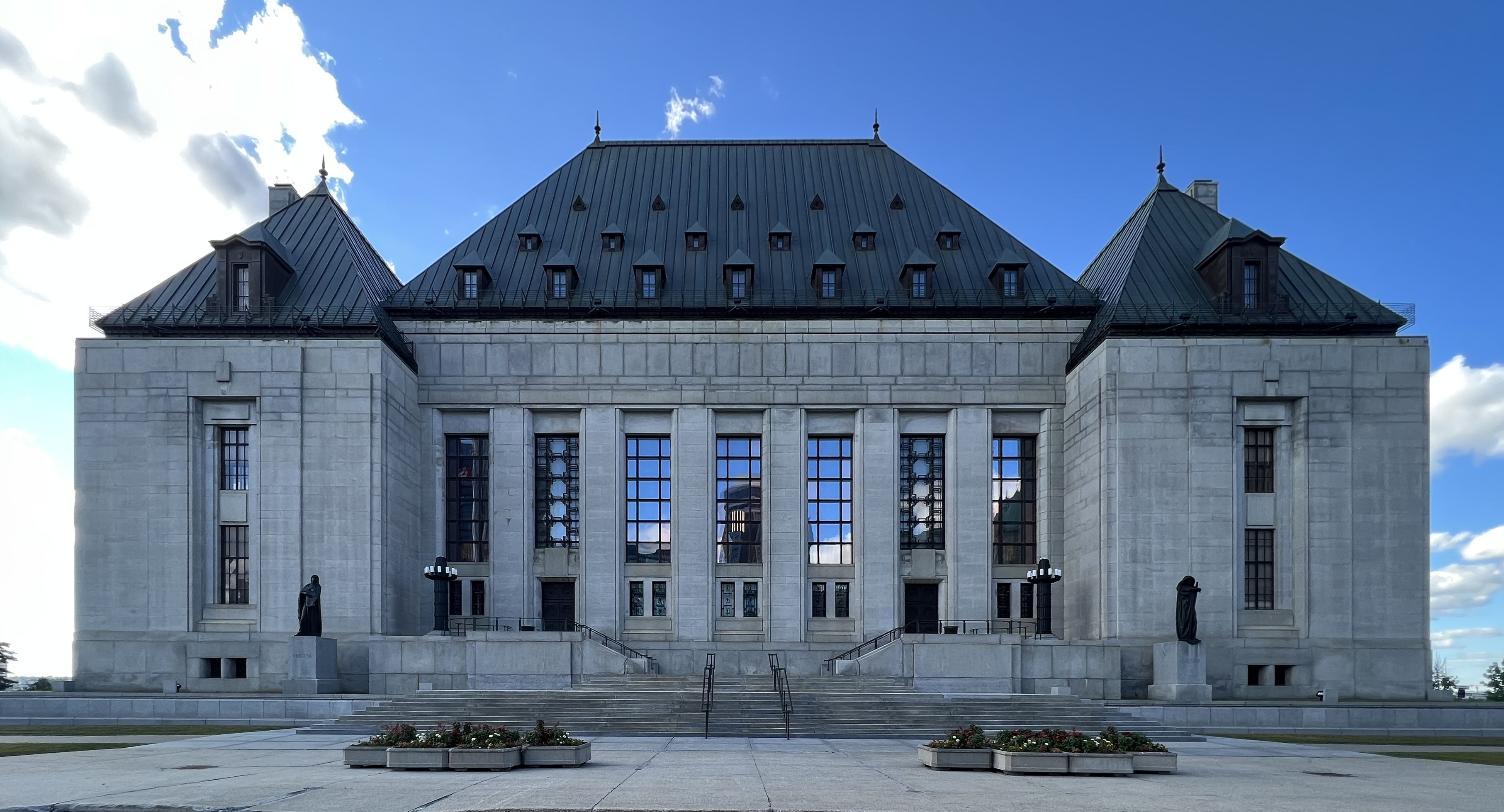
Dwong33, CC0, via Wikimedia Commons
Canada high court recognizes new civil wrong of intimate partner violence

The Supreme Court of Canada recognized intimate partner violence as a new civil wrong on Friday. The majority said it is a “pernicious social ill” that the law must address.

Six justices decided to recognize intimate partner violence as a new tort—an act or omission that injures another, constituting a civil wrong that attaches liability. Justice Nicholas Kasirer, for the majority, accepted that intimate partner violence offends the victim’s dignity, autonomy and equality in a relationship that existing tort law fails to capture. The law cannot sufficiently compensate the victims because it fails to recognize the violence as a cumulative pattern of coercive control, its disproportionate impact on women and its aggravated distinct nature in the intimate partnership setting.

To claim the tort, a plaintiff needs to establish that the defendant intentionally engaged in the abusive conduct, arising from an intimate relationship and that it amounts to coercive control objectively. In her concurring opinion, Justice Andromache Karakatsanis would have included acts or threats of violence that cause physical or psychological harm, instead of limiting the tort to objective coercive control.

The three dissenting justices described this development as “unprecedented” in the common law tradition, as they considered the majority to be formulating the tort from a vacuum of comparative law or legal commentaries. They criticized the majority for creating legal uncertainty, as there is limited guidance on the scope of coercive control and the quantification of damages under the new tort. Several justices previously expressed this concern in the hearing.

Kate Feeney, litigation director at advocacy group West Coast LEAF, said the ruling is a “groundbreaking step” towards addressing discrimination against survivors of intimate partner violence. Niki Sharma, the Attorney General of British Columbia, also welcomed the ruling, adding that:

This ruling will make a meaningful difference for survivors and build on the work underway in British Columbia to better support them, including initiatives such as the Family Law Act modernization project, the Intimate Images Protection Act and our advancing work related to Dr. Kim Stanton’s recommendations to address systemic and legal barriers in BC’s legal system.

Relatedly, New Brunswick’s legislature is also moving to remove the limitation period for intimate partner violence victims to initiate a claim against the perpetrator.

According to police-reported data, there were 356 victims of intimate partner violence per 100,000 population in Canada in 2024. This represented a 14 percent increase from 2018. The rate of women and girls being victims of intimate partner violence was 3.5 times higher than that of men and boys in 2024.

The case, Ahluwalia v. Ahluwalia, concerns a wife who suffered from intimate partner violence in a 16-year marriage. The complained conduct included physical assault, humiliation, isolation of the wife from family, pressure for sex through mistreatment, and financial control. Ruling in favor of the wife, the trial judge recognized the novel tort of family violence. However, the Court of Appeal for Ontario unanimously declared that the law should not recognize the new tort.

You’ll Never Guess Trade Unions’ Position on AI Data Centers

You’ll Never Guess Trade Unions’ Position on AI Data Centers

Futurism · an hour ago
by Joe Wilkins · Artificial Intelligence


Trade unions have a centuries-long history of squaring up against the might of industrial capitalists to fight for rights that workers now often take for granted, from the eight-hour work day to the federal minimum wage to workplace safety laws.

If you were to imagine how unions are responding to the tech industry’s massive push to build AI data centers across the country — an issue that’s currently uniting the grassroots left and right to an almost unprecedented degree in opposition — you might reasonably assume they’re staunch foes of the projects.

But in the topsy-turvy world of AI, where alliances often seem to contradict traditional political categorization, you’d be dead wrong. Instead, unions are playing a pivotal role in the tech industry’s push to ram data centers through local opposition. According to the Associated Press, they’ve become a publicly visible force alongside pro-business Republicans and big tech corporations — two famously anti-labor cohorts, ironically.

The core factor underscoring this contradictory stance is construction employment. When data center developers approach communities in search of land to erect their computational complexes, one of the main carrots they wave around are jobs, both temporary construction labor and permanent full-time labor.

At this point, we know that data centers aren’t a major source for quality, full-time jobs after they’re built. They do require tons of contract construction gigs, however, which generates short-term work for building trades workers, and growth for their craft unions.

“When people say, you know, ‘data centers are the root of all evil,’ we’re just saying, ‘look, they do create a hell of a lot of construction jobs, which we live and work in your communities,'” president of the Pennsylvania Building and Construction Trades Council Rob Bair told the AP.

In effect, these unions are abandoning their communities in favor of narrow self-interest — prioritizing immediate, short-term gains while ignoring the material harm data centers inflict on their communities.

It’s not a new phenomenon, but one which has become increasingly common as trade unions have been defanged. For example, the AFL-CIO, the largest federation of trade unions in the US, infamously supported the US war on Vietnam for its stimulating effect on industry, siding with conservative and military industrial complex forces over the progressive anti-war movement.

The real tragedy here isn’t that unions have forgotten how to fight — but that increasingly, they seem to have forgotten who it is they’re fighting for in the first place.

How FIFA’s Climate Solution Has Turned Into ‘Water-Gate’


How FIFA’s Climate Solution Has Turned Into ‘Water-Gate’

June 19, 2026

Reading time: 4 minutes

Full Story: Grist

Author: Tik Root


A Seattle councilmember on the field ahead of player arrivals and warm-up, June 18, 2026. (washuugenius/flickr)

This story was originally published by Grist. Sign up for Grist’s weekly newsletter here.

Anyone who hasn’t watched a soccer match since the last World Cup will notice something new: players stopping midway through each half to drink some water.

Introduced in the name of player safety, these mandatory three-minute breaks are a surprise controversy that has shoved climate change into the spotlight. “Water-gate,” blared a headline in The Independent, a United Kingdom newspaper. The chief sportswriter at the Daily Mail called the breaks a “momentum killer” and a “money-grabbing disgrace.”

Fans were equally outraged. Spectators at the match between England and Croatia booed when the referee blew the whistle, and comments poured in on Reddit. “I’m booing from home,” read one. Another said, “FIFA ruined the beautiful game.”

FIFA, the sport’s governing body and organizer of the tournament, declined to comment and referred Grist to its announcement of the policy in December. “The use of hydration breaks is part of a focused attempt to ensure the best possible conditions for players,” the statement read. Before this World Cup, cooling breaks only occurred when the wet bulb temperature—essentially a measure of air temperature and humidity combined—reached 32°C. Now the rule applies to all games, regardless of temperature, humidity, or other factors. It even applies to matches played indoors with air conditioning.

The move came after criticism of a tournament in the United States last summer, when the organization representing players, FIFPRO, said extreme heat should have cancelled matches. “It has never been more important,” the organization said in a press release before the World Cup, “to give space to scientific knowledge and find mitigation strategies that protect the health and wellbeing of our players.”

There is no doubt that rest and water can help protect players in a world where extreme heat is becoming more common and increasingly dangerous. But many fans, and even athletes, think FIFA has gone too far. “If it’s really hot, obviously it will be good to put them in. But I think you have ⁠to look at it in every game separately, in my opinion,” said Virgil van Dijk, captain of the Netherlands’ squad. One Reddit user complained, “We’re inundated with commercials.”

That’s been a frequent complaint, and it has led to speculation that FIFA implemented the breaks to boost the number of ads that are shown. Broadcasters aren’t required to go to full-screen commercials during hydration breaks—Telemundo and the BBC, for instance, don’t. FIFA also dictates that ads must start 20 seconds into the pause and end 30 seconds before play resumes. But that still creates 2 minutes and 10 seconds of extra ad time available per half, which can be extremely lucrative. The Wall Street Journal reports that a 30-second spot during early games sells for roughly $200,000 and rises to around $750,000 when the U.S. national team plays.

“They’ve essentially divided the game into quarters,” John Kosner, a former ESPN executive, told The Journal, “and made enormously valuable breaks.”

About 67 minutes into the opening game of the World Cup, the referee signaled for a mandatory hydration break. The American broadcaster, Fox, cut to commercials. But they ran longer than the respite, so players were left stalling and many viewers missed the restart entirely. Fox said it didn’t see the referee signal the start of the break because it came during a replay. FIFA doesn’t plan to punish the network. But the incident did little to quell people’s fears about commercialization—in part because the temperature at kickoff was a relatively balmy 23.3°C.

FIFA has required the breaks in all matches as an effort to be fair across a tournament that sees teams playing in 16 stadiums and three countries. That argument, though, has again done little to ease criticism. “That doesn’t ring true to me,” said Chris Taylor, the head coach of the Vermont Green FC’s men’s team, explaining that every soccer game has different stoppages and different lengths.

The Green are a climate-focused organization, so the dangers of extreme heat are particularly front of mind. Taylor sees hydration breaks as critical when the conditions warrant them, which they have numerous times during his decades-long career as a player and coach. Still, he questions FIFA’s motives at this World Cup.

“I don’t think the health of the players is their primary concern,” he said. “This World Cup has felt that every angle has been monetized.”

World Sailing Judicial Decisions

 World Sailing Judicial Decisions

Disciplinary and appeals decisions within World Sailing are determined by the Independent Bodies in accordance with the Constitution. This includes an Investigation Panel, a Disciplinary Tribunal, and a Safeguarding Disciplinary Tribunal.

Emil Gustavsson of Sweden is listed as currently suspended from all sports from February 11, 2026 to August 10, 2029. His suspension falls under according to RF statutes chapter 14 section 2 of the Swedish Sports Confederation, with this section of their general disciplinary rule book listing offenses for which an athlete, coach, official, or member can be punished or suspended:

• Abusive or insulting behavior,
• Violence or threats,
• Cheating or misleading officials,
• Violating competition rules,
• Corruption or improper influence,
• Financial irregularities,
• Conduct damaging to the reputation of sport,
• Ignoring federation decisions or suspensions.

Gustavsson had been active in the 29er Class but the publicly available suspension listing did not specify which subsection or exact misconduct applied. For additional details, click here.

Florida becomes first state to sue OpenAI

 Florida becomes first state to sue OpenAI


OpenAI logo under a gavel

Morning Brew Inc

Florida Man is taking on Sam Altman. Florida Attorney General James Uthmeier filed an 83-page lawsuit against OpenAI and its CEO, Sam Altman, yesterday, accusing the company of releasing ChatGPT despite knowing its safety flaws.

How is this case different from others? OpenAI is wrapped up in so much litigation, its in-house legal department is running out of timecards. The company has been at the center of high-profile copyright and privacy litigation, and is also being sued by seven people claiming that ChatGPT drove individuals to suicide and other delusions. But Florida is the first state to sue the company:

  • Florida’s suit alleges that OpenAI’s “insatiable quest to win the AI arms race” and drive to make money overshadowed red flags about the technology.
  • The suit also says OpenAI puts users, especially children, at a risk of “addiction, cognitive decline, violence, and related harms.”
  • It also aims to hold Altman personally liable for harm.

In the civil suit, Uthmeier references a criminal investigation he opened earlier this year against the company for its alleged role in helping an individual plan a mass shooting at Florida State University. It remains ongoing.

OpenAI and Altman haven’t responded directly to the new lawsuit, but the company has previously denied similar claims and has said it’s working on bettering safety protocols within ChatGPT.

Big picture: Uthmeier and Florida Governor Ron DeSantis, both Republicans, have broken with President Trump’s policy of deregulating AI. Public backlash against the tech has intensified—and even the Pope called on lawmakers to regulate it

A timeline of fast-moving prediction markets

 A timeline of fast-moving prediction markets

Americans have been placing bets on presidential elections since the 1880s, but it wasn’t until 1988 when three economists at the University of Iowa decided (over lunch beers) to introduce the Iowa Electronic Markets (IEM), an early prediction market that still exists today. Other private prediction markets like InTrade popped up in the early 2000s but were shut down once they attracted too much attention.

But prediction markets have truly taken off in the last year and a half, after the 2024 presidential election and a federal court win that cleared the way for more election contracts. The Trump administration’s loosening of regulations (and the Trump family’s own investments) has also supercharged their adoption.

Here’s a brief timeline of how we got here:

Jan. 2025: Donald Trump Jr. announces he is joining Kalshi as a “strategic advisor.”

March 2025: Robinhood launches a prediction market hub in its app with a Kalshi partnership.

Aug. 2025: Donald Trump Jr. also joins Polymarket’s advisory board after his venture capital firm invested in the company.

Oct. 2025: The NHL announces a partnership with Polymarket and Kalshi, the first major sports league partnership.

Dec. 2025: Kalshi partners with CNN and CNBC.

Dec. 2025: Polymarket officially relaunches in the US after a nearly four-year ban.

Dec. 2025: DraftKings, the sports betting app, launches its own prediction market.

Jan. 2026: Dow Jones, the Wall Street Journal’s parent company, partners with Polymarket.

March 2026: MLB announces a deal with Polymarket, becoming the largest US sports league to partner with a prediction market.

March 2026: The US Senate introduces a bipartisan bill to ban prediction markets from offering sports contracts.

April 2026: The CFTC sues Arizona, Connecticut, and Illinois to be the sole regulatory body of prediction markets. (State-level battles might head to the Supreme Court next year.)

April 2026: A federal court rules that New Jersey cannot regulate Kalshi’s federally approved contracts, giving the industry a major court victory.

April 2026: The Senate unanimously approves a ban on staff members trading on prediction markets.

AI cheating is everywhere


Beef prices drive iconic Texas BBQ joints to closure

 Beef prices drive iconic Texas BBQ joints to closure

Texas barbecue struggling

Niv Bavarsky

Everything is bigger in Texas, including the cultural damage from rising beef prices. Storied barbecue pits across the Lone Star State are shuttering, squeezed by the skyrocketing cost of their culinary touchstone, brisket, the Washington Post reported yesterday.

Droughts reducing the US cattle herd to its smallest size in 75 years and tariffs on imported beef have been blamed for the Texas barbecue crown jewel starting to cost as much as actual gems. The retail price of the cut was up 32% this month from last year, according to the USDA.

Brisket bust

Those rising beef costs are reducing brisket margins, creating an existential crisis for the purveyors of the state’s signature smoky treat:

  • Higher costs were partially responsible for the recent closure of Kirby’s BBQ, a Houston-area destination for oak-smoked brisket. They also claimed staple spots Brett’s BBQ Shop and Sabar BBQ.
  • The award-winning BBQ restaurant Burnt Bean Co. told the WaPo that it’s in “survival mode” despite lines out the door. It’s considering serving brisket only once a week.

One Texan pit master said he worries the beef crunch will reduce the regional variety of the state’s brisket scene.

Meanwhile…the US Justice Department and Texas are investigating four meatpacking giants—which control 85% of the US beef market—over allegations of anti-competitive practices that hurt ranchers and retailers.

World Cup’s hydration breaks stir up controversy

 World Cup’s hydration breaks stir up controversy. FIFA is mandating three-minute hydration breaks, pausing about 22 minutes into each half of the game for players to drink, and not since someone’s mom forgot to cut up oranges have water breaks at soccer games been so divisive. The justification for the change to the usually continuous game is to protect athletes playing in extreme heat, but FIFA has also allowed broadcasters to cut to commercials during these breaks—something Fox, the English-language US broadcaster, is taking advantage of. That could add up to more than 800 additional advertising slots during the tournament, per Bloomberg. But the extra pause has drawn complaints from some players and fans, who say it disrupts the game’s flow.

Barriers grow for international students seeking U.S. jobs

Barriers grow for international students seeking U.S. jobs: The ‘American dream ... is collapsing’
Published Sun, May 24 202610:15 AM EDT

Jennifer Liu
ShareShare Article via FacebookShare Article via TwitterShare Article via LinkedInShare Article via Email


3:41
Running out of options in the U.S., more international students are eyeing alternative paths abroad


Sakshi Patel has known since she was little that she wanted to study in the U.S. She says she pictured herself landing a job in New York City, the financial capital of the world, and living out her version of the American dream far from home.

Patel, who earned her master’s degree in financial management from Boston University in May 2025, says she has about two months left on her current work authorization and is job hunting full force. If she doesn’t get a job within that time, she’ll have to move back to her native India.


As difficult as it is for recent college graduates to gain their footing in one of the worst entry-level job markets in recent memory, international graduates are also having to navigate an unpredictable immigration environment in order to jump-start their U.S.-based careers and lives. Faced with additional and increasing difficulties, some international students are putting together backup plans.

After graduating last year, Patel, 23, began working as a business analyst with a nonprofit under the optional practical training program, or OPT, the work authorization available to international students after they graduate. After her one-year OPT expires this summer, though, she’ll need to find an eligible job related to her degree, then apply for a STEM OPT extension of up to two years — available to some graduates with science, technology, engineering and math degrees — in order to stay in the U.S.

Patel told CNBC Make It that she’s been “making every effort” to network and land a job in the U.S. The experience has been tough, she says, but she remains optimistic: “I came with that dream to the United States, and I still hope to live that dream.”
International graduates face additional hurdles in tight job market


Approximately 84,000 international students will earn bachelor’s degrees from American universities in 2026, according to an analysis of National Center for Education Statistics data by the Economic Innovation Group.

Sakshi Patel graduated with her master’s degree in May 2025 and hopes to secure a full-time job in finance.
Courtesy of subject


As of 2025, about 306,000 international students were working toward their master’s degrees and 153,000 toward their doctorate degrees, according to the latest available data from Open Doors, an information resource sponsored by the U.S. Department of State. Tens of thousands of these students are likely to hit the U.S. job market after earning their advanced degrees this spring.

Many new grads will enter a weakening labor market for young workers.

Job postings on Handshake, the early career site, were down 2% between July 2025 and March 2026 compared with the same period the year prior, and down 12% from 2019-2020, just before the Covid pandemic. The unemployment rate for recent college grads age 22 to 27 stood at 5.6%, according to New York Fed data for March 2026, compared with 3.1% for all college graduates and 4.2% for all workers.

There are students concerned about whether the U.S. is a place where they can build their careers.

Erica Ford
International career development coach, Cornell University


Erica Ford, an international career development coach at Cornell University, says job hunting has gotten more difficult for students in recent years, including for the 300 international students she directly supports each year.

Students in STEM fields who would have been in high demand in previous years are now happy to get just one job offer, Ford says. Doctoral candidates are seeing a drop in research jobs and are pivoting to industry opportunities, and those going into the nonprofit sector are seeing their potential employers conduct layoffs, she adds.

The low-hire job market negatively affects students as a whole, but international students have to navigate additional barriers, such as temporary work authorizations, Ford says.

“Some of the most common concerns are: Are employers still hiring international students right now?” she says. “Am I being screened out because of my temporary work authorization or because I said that I would need sponsorship in the future?”

Whether due to immigration policy changes, the tighter labor market or a combination of multiple factors, data shows employers scaling back on opportunities for international grads: The share of full-time job postings offering visa sponsorship dropped from 10.9% in 2023 to just 2.6% in 2026, according to Handshake data provided to CNBC Make It, with the tech sector seeing the steepest decline.

Before, there was this golden standard of coming to the U.S., staying in the U.S., [and] realizing your American dream. This dream is collapsing.

David Li
Ph.D. candidate in Madison, Wisconsin


Beyond the job market, international graduates face additional hurdles in a challenging immigration environment under the second Trump administration.

For example, application processing for some immigration benefits, including the OPT program, has been paused for people from countries that are part of President Donald Trump’s travel ban, Inside Higher Ed reports, leaving many F-1 visa holders in limbo and unable to begin working after graduation.
Students are ‘parallel planning’ as their ‘American dream ... is collapsing’


Many international students are responding to the job market and immigration hurdles by taking more time to find opportunities and “parallel planning,” Ford says.

They’re still pursuing opportunities in the U.S., she says, “but they’re also looking either back home or in a third country that’s not home and not the U.S.,” especially across Europe, Southeast Asia, Canada and Australia.

David Li, 29, a doctoral candidate in political science at the University of Wisconsin-Madison, says he plans to start looking for postdoctoral programs and jobs in academia in September. Given federal funding cuts to U.S. universities, he’s also considering opportunities in Europe, his native China and elsewhere in Asia, he says.

Li says the increasing strains around immigration have “shaken the confidence” of his peers who aspire to study and work in the U.S. Two years ago, if someone got an offer from a U.S. university to study, it was assumed to be their best option, Li says, but not anymore. He says many of his younger peers are now considering studying and starting careers in Hong Kong and Singapore instead.

“Before, there was this golden standard of coming to the U.S., staying in the U.S., [and] realizing your American dream,” Li says. Now, “this dream is collapsing.”

10:56
Why Gen Z job hunting is out of control right now


The U.S. issued 97,000 fewer F-1 visas to international students to study full-time in the U.S. for the 2025-26 academic year than for the previous year, a 36% drop, according to an analysis of U.S. Department of State data by The Chronicle of Higher Education.

The growing obstacles could have long-term impacts on incoming scholars, Ford says: “There are students concerned about whether the U.S. is a place where they can build their careers.”

The loss of international grads in the U.S. could also have broader economic consequences.

Former international students from American universities have gone on to found one-quarter of U.S. startups valued at $1 billion or more, according to a 2022 analysis from nonprofit NAFSA: Association of International Educators.

The impact of the loss could be especially significant in STEM fields. Researchers say a one-third reduction in the number of international STEM graduates could lead to annual gross domestic product losses of $240 billion to $481 billion over the next decade, according to an October 2025 working paper published by the National Academies of Sciences, Engineering and Medicine.

“The research literature provides strong and consistent evidence that high-skill immigration drives U.S. productivity and economic growth, with the largest effects from STEM-trained immigrants ... [arising from their] effects on new business formation, scientific discovery, and the patenting of new economic ideas,” the authors wrote.

Trump has previously said it’s a good practice to allow international students to study in the U.S., particularly those from China, and that reducing their numbers could cause financial harm to the university system, Fox News reported in November.

Those comments stand in contrast to some of his administration’s policies, including moves to revoke thousands of student visas, limit international student enrollment, and cap the length of time students can stay in the country.
First jobs are just the beginning of immigration challenges


Despite the tough job market, Ford, of Cornell, reminds international students that employers are still hiring and encourages them to embrace networking by taking actions such as attending conferences or messaging hiring managers, instead of relying only on online applications.

“In a market in the condition that we’re in right now, taking that extra step to build relationships and make personal connections makes a huge difference,” Ford says.

Doing so could help international students “be more than a candidate on paper” and build professional relationships in the U.S., where they may have limited connections compared with domestic peers, Ford says. They may also benefit from gaining a better understanding of how the U.S. recruitment market and timeline work differently from that of their home countries.

Even graduates who secure a job after college aren’t free of ongoing immigration stressors. That’s the case for Xinran Xu, 24, who is from China, earned her master’s degree from the University of Michigan in 2025 and works as a statistician at a medical device company outside Minneapolis.

Xu’s OPT expires this month. She says her company has been supporting her in working with an immigration attorney, paying the appropriate fees and helping her apply for an H-1B visa that would allow her to continue working in the U.S.; her petition is currently under review, she says.

I just want to use that time to make a fair effort [at getting a job in the U.S.] so that I don’t have any kind of regrets.

Sakshi Patel
job seeker in Boston


The Trump administration’s recent changes to the H-1B visa process have already caused a stir: In September, the White House announced a $100,000 fee for new H-1B visa recipients coming to the U.S. The change didn’t directly affect Xu since she was already residing in the U.S., but the move signaled to her that the process for work authorization seems to be getting more restrictive.

More uncertainty could lie ahead: In March, the Department of Labor proposed a new rule that would increase the minimum salaries required for employees seeking H-1B visas by 21% to 33%, depending on their designated job level. The proposed change could lead to fewer opportunities for younger international workers, who are earlier in their careers and less likely to command higher salaries.

Xinran Xu says changes to immigration policies today make it feel more difficult to build a life in the U.S. than for previous foreign-born workers.
Courtesy of subject


Staying in the U.S. in effect means preparing to confront changing immigration policies. Xu says establishing a life in the U.S. feels harder for international grads today than it was before.

“I’m just expecting a bumpy road throughout the next five years,” she says.

As for Patel, in Boston, she says that ultimately “if my destiny is in India, I will get a job in India.” But even if she ends up moving back home, she says, she’ll still try to find a way back to the U.S.

Until her OPT authorization ends in the summer, she says, “I just want to use that time to make a fair effort so that I don’t have any kind of regrets.”

— CNBC’s Nathaniel Lee contributed to this report.

RG Richardson Communications News

I am a business economist with interests in international trade worldwide through politics, money and banking. Interactive Internet VoIP and secure eMail Communications. The author of RG Richardson City Guides has over 300 guides, including restaurants and finance.